

Do mice disappear when temperatures drop? We tracked 3,196 rodent detection events over 90 days to find out. All data was tracked through our RodentRX analytics platform.
Using IoT sensors installed across six monitoring zones at a Sterling, MA property, we recorded every mouse movement from October 31, 2025 through January 28, 2026. The study period included a January cold snap that pushed temperatures below zero.
The short answer: mice don’t hibernate or leave. They stay active all winter. But their behavior shifts in predictable ways once temperatures drop below 14°F.
This article breaks down what the sensor data revealed about temperature thresholds, storm behavior, snow depth, and timing patterns. If you’re dealing with mice in a Massachusetts winter, this data explains what’s happening inside your walls.
Key Findings
We tracked 3,196 rodent detection events across a 90-day New England winter using IoT pest monitoring sensors. Here’s what the data showed:
- Rodents stay active year-round. We recorded activity at temperatures as low as -4°F.
- A behavioral threshold exists at 14°F. When daily average temperature drops below 14°F, activity falls by 56%.
- Activity increases during storms, not before them. The “pre-storm foraging surge” wasn’t supported by our data.
- Peak activity shifts earlier in cold weather. Rodents start foraging around 6 PM in winter versus 9 PM in milder conditions.
- Deep snow creates a real barrier. Accumulation over 6 inches reduces surface activity by nearly 50%.
Why We Ran This Study
Most pest control guidance about winter rodent behavior comes from laboratory studies or general observations. We wanted to know what actually happens in the field, measured continuously over an entire winter season.

From October 31, 2025 through January 28, 2026, we deployed seven IoT sensors across six monitoring zones at a property in Sterling, Massachusetts. The sensors recorded motion detection events around the clock, which we matched against hourly 263 weather and environment data.
The goal was simple: understand how temperature, snow, wind, and storms affect when and how much rodents move. That information helps us schedule service visits, set realistic expectations with customers, and make better decisions about winter monitoring.
Finding 1: Rodents Don’t Take Winter Off
The most important finding is also the simplest: rodents remain active all winter long.
Even on the coldest night of our study, when temperatures dropped to -4°F, we still recorded activity. Cold weather slows rodents down, but it doesn’t stop them.
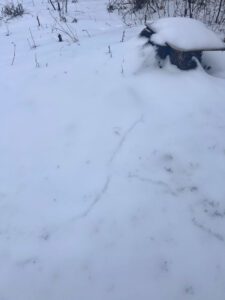
Here’s what we observed across different temperature ranges:
| Temperature | Activity Level | Change from Baseline |
|---|---|---|
| Above 50°F | 2.76 events/hour | Baseline |
| 32-41°F | 2.35 events/hour | -15% |
| 14-23°F | 2.02 events/hour | -27% |
| Below 5°F | 1.46 events/hour | -47% |
The decline is gradual, not a cliff. Rodents adapt their behavior rather than shutting down entirely. This means winter monitoring isn’t optional. It’s just different.
If you’re hearing scratching in your walls in January, those mice haven’t “come inside for winter.” They moved in months ago and never left. The cold just makes them more cautious about when they venture out.
Finding 2: The 14°F Threshold
When we looked at daily activity totals instead of hourly rates, a clear pattern emerged. There’s a behavioral threshold at around 14°F mean daily temperature.
On days when the average temperature stayed at or above 14°F, we recorded an average of 37.7 events per day. When the daily average dropped below 14°F, that number fell to 16.6 events. That’s a 56% reduction.
| Condition | Average Events per Day |
|---|---|
| Daily mean ≥ 14°F | 37.7 |
| Daily mean < 14°F | 16.6 |
What happens below this threshold? A few things:
- Rodents take fewer foraging trips and travel shorter distances
- They rely more heavily on food they’ve already cached
- They spend longer periods in their nesting areas
- They may huddle together for warmth
This threshold lines up with what researchers know about rodent metabolism. Below a certain point, the energy cost of staying warm starts to outweigh the benefit of finding more food. So they conserve energy instead.
The January 2026 Cold Snap
A severe cold snap from January 20-27 gave us a natural experiment. Temperatures dropped as low as -4°F, with daily averages consistently below 14°F for a full week.
| Date | Low / High | Daily Events |
|---|---|---|
| Jan 15 | 30°F / 48°F | 22 |
| Jan 20 | 12°F / 24°F | 19 |
| Jan 24 | -4°F / 17°F | 15 |
| Jan 26 | 7°F / 18°F | 6 |
Activity declined steadily as the cold intensified. But even on the coldest day, we still recorded 15 events. Rodents were still moving.
One interesting detail: activity stayed suppressed even after temperatures started recovering on January 26-27. There appears to be a lag effect. The rodents don’t immediately bounce back when it warms up a few degrees.
Finding 3: What the Data Says About Storms
You’ve probably heard that rodents forage heavily before a storm hits, stocking up in anticipation of bad weather. It’s a reasonable assumption. It’s also not what we observed.
When we compared activity on the day before a storm, the day of the storm, and the day after, here’s what we found:
| Timing | Average Daily Events |
|---|---|
| Day before storm | 32.5 |
| Storm day | 39.7 |
| Day after storm | 35.9 |
Activity was highest during the storm, not before it.
We also looked at barometric pressure changes, since falling pressure typically signals an approaching storm. Activity rates were nearly identical whether pressure was dropping rapidly, stable, or rising. The rodents in our study didn’t seem to anticipate weather changes.
Why might activity increase during storms? A few possibilities:
- Predator avoidance. Owls, hawks, and other predators hunt less effectively in rain and snow. Storms may create a safer window for foraging.
- Sound cover. Precipitation noise masks the sounds rodents make while moving, reducing their detection risk.
- Low pressure effects. Storms come with low barometric pressure, which may independently trigger activity for reasons we don’t fully understand.
The practical takeaway: don’t assume a rainy or snowy night means rodents are hiding. Our sensors showed the opposite.
Finding 4: Peak Activity Shifts Earlier in Cold Weather
Rodents are nocturnal, but “nocturnal” doesn’t mean the same thing in January as it does in October.
On warmer days (above 41°F), peak activity occurred around 9 PM. On cold days (below 23°F), peak activity shifted to around 6 PM. That’s a 2-3 hour difference.
| Temperature | Peak Activity Time |
|---|---|
| Cold (below 23°F) | 6:00 PM |
| Moderate (23-41°F) | 5:00 PM |
| Warm (above 41°F) | 9:00 PM |
Why the shift? On cold days, rodents probably want to maximize feeding time before overnight temperatures drop to their lowest. Shorter winter days also compress the available activity window. And predators may be less active at dusk during cold weather, making early evening safer.
If you’re trying to spot rodent activity yourself, or if you’re scheduling a service visit, early evening (5-7 PM) may be more productive during winter months than late night.
Finding 5: Snow Depth Matters More Than Temperature
Light snow doesn’t slow rodents down much. Deep snow is a different story.
| Snow Depth | Activity Level | Change from Baseline |
|---|---|---|
| No snow | 2.33 events/hour | Baseline |
| Under 2 inches | 2.29 events/hour | -2% |
| 2-6 inches | 1.90 events/hour | -18% |
| Over 6 inches | 1.22 events/hour | -48% |
The threshold appears to be around 6 inches. Below that, rodents navigate snow cover without much trouble. Above that, deep snow creates a real physical barrier to surface movement.
This doesn’t mean rodents disappear after a big snowstorm. They’re likely still active beneath the snow in tunnel networks (what biologists call “subnivean” spaces). With this storm bringing all powder light snow it doesnt support their tunnels as it will collapse on them but this is tough to validate under 25″ of light snow.
After heavy snowfall, focus monitoring on protected areas: foundation gaps, entry points near the structure, and locations where snow has been cleared or melted.
One More Surprise: Wind Doesn’t Deter Them
We expected windy nights to show reduced activity. The opposite happened.
| Wind Speed | Activity Level | Change from Calm |
|---|---|---|
| Calm (under 3 mph) | 1.91 events/hour | Baseline |
| Light (3-6 mph) | 2.13 events/hour | +12% |
| Moderate (6-12 mph) | 2.23 events/hour | +17% |
| Windy (over 19 mph) | 2.45 events/hour | +28% |
Activity increased 28% on the windiest nights compared to calm conditions.
The likely explanation is similar to storms: wind noise covers movement sounds, and predators hunt less effectively in windy conditions. Whatever the reason, don’t assume a blustery night means quiet rodent activity.
What This Means for Homeowners
If you’re dealing with mice or rats this winter, here are the practical takeaways:
They haven’t left. Cold weather reduces activity but doesn’t eliminate it. If you saw signs of rodents in the fall, they’re still there. They’re just being more careful.
Extreme cold is temporary relief, not a solution. A week of sub-zero temperatures will slow things down, but activity will return when it warms up. Don’t mistake a quiet week for a solved problem.
Timing matters. If you’re trying to observe activity yourself, check around 5-7 PM during cold weather rather than waiting until late night.
Weather isn’t an excuse. Storms and wind don’t send rodents into hiding. If anything, they may be more active. Service visits and monitoring should continue regardless of weather conditions.
Snow accumulation is the real barrier. Deep snow (over 6 inches) significantly reduces surface activity. After a major snowstorm, focus attention on areas where rodents can access your home without crossing open snow.
How We Collected This Data
We deployed two types of IoT sensors:
- Skyhawk motion sensors using infrared detection
- Sensing iQ pressure sensors using plate-based detection
Seven sensors covered six zones including interior basement access, exterior agricultural buildings, and neighboring structures. Weather data came from National Weather Service station KFIT at Fitchburg Municipal Airport.
All timestamps were matched to corresponding hourly weather conditions. Correlations were calculated using standard statistical methods. The full technical methodology is available on request.
Study Limitations
This is a single-site study in Sterling, Massachusetts. Results may vary in other climates, building types, or rodent populations. The 90-day period covered winter only; spring, summer, and fall patterns weren’t captured. Snow depth measurements were interpolated estimates rather than direct on-site readings.
Despite these limitations, the dataset of 3,196 events across 90 days provides a meaningful window into real-world winter rodent behavior that laboratory studies can’t replicate.
About This Research
PESTalytix operates IoT pest monitoring networks for residential and commercial properties in Worcester County, Massachusetts. This study was conducted at our Sterling headquarters using the same sensor technology we deploy for customers.
Our approach combines continuous digital monitoring with data analysis to detect rodent activity earlier than traditional inspection methods. Every recommendation we make is backed by sensor data, not guesswork.
If you’re dealing with a rodent problem this winter, or if you want monitoring that actually shows you what’s happening between service visits, [contact us for a free consultation].
Study period: October 31, 2025 through January 28, 2026 Location: Sterling, Massachusetts Total events analyzed: 3,196 Report published: January 29, 2026