

Wood destroying insects cause more structural damage to Worcester County properties than fires and storms combined. From spring swarmers through fall, subterranean termites (Reticulitermes flavipes), carpenter ants (Camponotus pennsylvanicus), powder post beetles, and carpenter bees (Xylocopa virginica) target the wood framing that holds your building together.
Maybe you own a single-family home in Sterling. Maybe you manage rental units in Worcester. Maybe you need a WDI report for a real estate closing. Understanding these insects helps you catch problems early and avoid costly repairs.
PESTalytix provides wood destroying insect inspections and treatment throughout Worcester County. We start with inspection, document what we find, and give you treatment options. We also provide NPMA-33 WDI inspection reports for real estate transactions.
Schedule your free wood destroying insect inspection
The Four Wood Destroying Insects in Worcester County
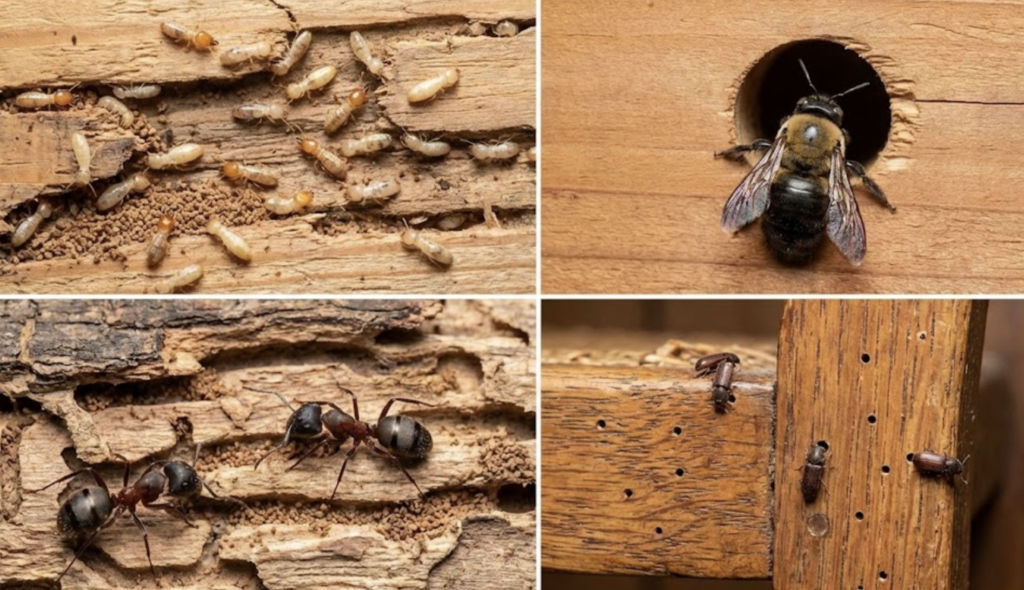
Worcester County’s geography creates ideal conditions for wood destroying insects. The Nashua River system, Wachusett Reservoir watershed, and dozens of smaller ponds keep humidity high. Sandy soils along river valleys in Clinton, Lancaster, and West Boylston let termite colonies spread easily. The region’s mix of older homes, post-war construction, and newer subdivisions each have different weak spots.
Each section below explains why these pests target Worcester County properties, how to spot them, where they cause damage, and what happens if you wait.
Why Do I Have Termites in My Worcester County Home?
Subterranean termites (Reticulitermes flavipes) are the most destructive wood destroying insects in Massachusetts. Unlike carpenter ants, termites actually eat wood as their food source.
What brings termites to your property:
- Sandy soils along Water Street in Clinton, the Lancaster flats near Route 70, and low areas of West Boylston make tunnel-building easy
- High water tables in river bottom neighborhoods provide the moisture termites need
- Properties near the Wachusett Reservoir deal with constant humidity at foundation level
- Wood scraps buried during construction give termites a food bridge to your house
- Mulch piled against foundations creates a direct path to wood framing
What Are Termites Looking For?
Termites need three things: wood, moisture, and soil contact. They build mud tubes from their underground colonies up to the wood in your home. Worcester County’s wet springs and humid summers give them exactly what they want.
How Do I Know If I Have Termites?
You’ll See:
- Mud tubes (pencil-width tunnels) running up foundation walls
- Swarmers (winged termites) inside your home on warm spring days, usually near windows
- Piles of dropped wings on windowsills after a swarm
- Wood that sounds hollow when you tap it
- Paint bubbling or peeling on wood surfaces
You’ll Feel:
- Soft spots in wood flooring
- Baseboards that crumble when touched
- Door frames that stick or won’t close right
Where Do Termites Cause Damage?
| Location | Why It’s at Risk | What to Check |
|---|---|---|
| Basement sill plates | First wood above the foundation, often damp | Poke with screwdriver for soft spots |
| Porch posts | Touch the ground, trap moisture | Check where post meets concrete |
| Garage door frames | Often bare wood close to soil | Look at inside corners at floor level |
| Window frames | Condensation creates moisture | Look for bubbling paint, soft wood |
| Bath traps | Plumbing moisture under slabs | Check for mud tubes near toilet base |
| Stair stringers | Wood meets concrete in basements | Poke bottom of stair attachment |
For more on termite signs and treatment, see: Controlling Termites in Your Worcester County Home
What Happens If I Ignore Termites?
Termite damage builds quietly:
- Year 1-2: Colony finds feeding spots, little visible damage
- Year 3-5: Structural wood weakens, floors may start to sag
- Year 5+: Major structural problems possible, repair costs multiply
Massachusetts law requires you to disclose termite damage when selling. Untreated damage can knock 20-25% off your property value and create financing problems.
Why Do I Have Carpenter Ants in My Worcester County Home?
Carpenter ants (Camponotus pennsylvanicus) are the second most common wood destroying insect in Worcester County. They don’t eat wood like termites. They chew through it to build their nests.
What brings carpenter ants to your property:
- Oak and hickory forests in Princeton, Sterling, and Paxton house huge parent colonies
- Any wood damaged by water from ice dams, clogged gutters, or poor drainage
- Properties next to conservation land face constant pressure from forest colonies
- Firewood stacked against your house gives them a direct path inside
- Landscape timbers and decorative wood touching soil
What Are Carpenter Ants Looking For?
Carpenter ants need water-damaged wood for nesting and protein or sugar for food. They travel up to 300 feet from their main colony to set up satellite nests in homes.
How Do I Know If I Have Carpenter Ants?
You’ll See:
- Big black ants (1/4 to 1/2 inch) in your kitchen or bathroom
- Frass piles: sawdust-like debris mixed with wood shavings and bug parts
- Winged ants inside your home in spring
- Ant trails along foundation walls, especially after rain
You’ll Hear:
- Faint rustling inside walls during quiet evening hours
- Crinkling noise like cellophane when activity is heavy
You’ll Find Frass Near:
- Window sills and door frames where water gets in
- Basement rim joists (the first wood above your foundation)
- Behind dishwashers where it’s warm and damp
- Around skylights and bathroom vents where condensation builds up
Where Do Carpenter Ants Nest?
| Location | Why It’s at Risk | Signs of Nesting |
|---|---|---|
| Rim joists above foundation | First wood they reach, often damp | Frass piles in basement corners |
| Window frames | Condensation creates moisture | Soft wood, frass on sill |
| Porch roofs and columns | Ice dam damage, poor airflow | Hollow-sounding wood |
| Bathroom walls | Humidity, possible leaks | Ants near fixtures |
| Roof fascia | Gutter overflow damage | Frass visible from below |
| Deck connections | Water collects at ledger board | Frass under deck |
Homes along Mountain Road in Princeton, the Wachusett Reservoir buffer zone in Sterling, and wooded neighborhoods throughout Holden and Paxton face constant carpenter ant pressure from nearby forest colonies.
For more on carpenter ant signs and treatment, see: Controlling Ants in Your Worcester County Home
What Happens If I Ignore Carpenter Ants?
- Month 1-3: Satellite colony moves in, limited damage
- Year 1-2: Tunnel systems spread through studs and joists
- Year 3+: Structural wood fails, window and door frames give out
Properties near forests or conservation land often need yearly treatment.
Why Do I Have Powder Post Beetles in My Worcester County Home?
Powder post beetles cause serious damage to hardwood floors, trim, and antique furniture. Several species exist, with Lyctus beetles being most common in homes.
What brings powder post beetles to your property:
- Hardwood flooring (oak, ash, hickory) contains starches that attract egg-laying females
- Antique furniture and reclaimed wood may already have beetles inside
- Bamboo flooring and imported wood products sometimes arrive infested
- Unfinished or poorly finished hardwood lets beetles lay eggs
What Are Powder Post Beetles Looking For?
Adult beetles lay eggs in wood pores. The larvae bore through wood for 1-5 years, eating starches. Unlike carpenter ants and termites, powder post beetles like dry wood (under 10% moisture).
How Do I Know If I Have Powder Post Beetles?
You’ll See:
- Tiny, perfectly round exit holes (1/32 to 1/16 inch across)
- Holes the size of a pinhead to pencil lead
- Fresh holes with clean, sharp edges
- Fine, powder-like sawdust beneath holes
You’ll Feel:
- Silky, flour-like dust (unlike gritty carpenter ant frass)
- No pellets mixed with the powder
You’ll Hear:
- Very faint ticking or scraping in quiet rooms (larvae boring)
Where Do Powder Post Beetles Attack?
| Location | Why It’s a Target | What to Look For |
|---|---|---|
| Hardwood flooring | High starch content in oak, ash | Tiny holes with powder beneath |
| Wood trim and molding | Back side often unfinished | Holes along the grain |
| Antique furniture | May have come with beetles inside | Holes, powder in joints |
| Structural beams | Older homes with hardwood framing | Exit holes in basement joists |
| Bamboo flooring | High starch content | Powder in seams |
| Picture frames | Often bare wood | Holes with powder behind glass |
What Happens If I Ignore Powder Post Beetles?
- Damage builds slowly over multiple generations
- Adults emerge April through June, mate, and lay eggs in the same wood
- Flooring weakens over 5-10 years
- Antiques lose value and structural integrity
Why Do I Have Carpenter Bees in My Worcester County Home?
Carpenter bees (Xylocopa virginica) are large, solitary bees that drill into bare or weathered wood. People often confuse them with bumblebees, but carpenter bees have a shiny, hairless black rear end.
What brings carpenter bees to your property:
- Bare or weathered wood on decks, fascia, and trim
- South-facing surfaces (bees like warm, sunny spots)
- Old bore holes attract more bees (they reuse and expand tunnels)
- Cedar, pine, and redwood are favorites
- Stained but unsealed wood offers no protection
What Are Carpenter Bees Looking For?
Female carpenter bees drill into wood to create egg chambers. They don’t eat the wood. They hollow out tunnels where they pack pollen and lay eggs.
How Do I Know If I Have Carpenter Bees?
You’ll See:
- Perfectly round entry holes (1/2 inch across, size of your finger)
- Holes on undersides of deck rails, fascia boards, window trim
- Sawdust piles or streaks below entry holes
- Yellow-brown staining below holes
- Large black bees hovering near wood surfaces
You’ll Hear:
- Buzzing and drilling sounds in wood
You’ll Notice:
- Male bees hovering aggressively (they can’t sting but act tough)
- Woodpeckers hammering at your siding to reach the larvae
For more on carpenter bee signs and treatment, see: Controlling Carpenter Bees in Your Worcester County Home
Where Do Carpenter Bees Attack?
| Location | Why It’s a Target | Damage Pattern |
|---|---|---|
| Deck railings | Horizontal, weathered surfaces | Multiple holes in top rails |
| Fascia boards | South-facing, easy to reach | Holes under eave line |
| Porch ceilings | Sheltered, bare undersides | Holes when you look up |
| Window trim | Soft wood, often weathered | Holes in corners |
| Wood siding | Cedar and pine preferred | Holes at board edges |
| Outdoor furniture | Bare or weathered | Holes on undersides |
What Happens If I Ignore Carpenter Bees?
- Tunnels start at 4-6 inches, grow longer each year
- Returning bees expand old galleries every spring
- Woodpecker damage can be 10 times worse than the bee damage
- Structural wood weakens over multiple generations
- Deck railings and fascia boards eventually fail
Our Carpenter Bee Treatment Service addresses active infestations and prevents return visits.
Which Worcester County Homes Are Most at Risk?
Different construction types have different weak spots. Knowing your home’s vulnerabilities helps you watch the right areas.
| Housing Era | Typical Construction | WDI Weak Spots | Higher-Risk Neighborhoods |
|---|---|---|---|
| Pre-1950 | Fieldstone foundations, balloon framing | Termites enter through mortar gaps; carpenter ants find moisture-damaged sills | Clinton mill housing, Worcester Main South, Vernon Hill |
| 1950-1980 | Poured concrete, Cape and Ranch styles | Sill plate gaps from wood shrinkage; bath trap termite entry | Holden center, Shrewsbury Route 9 corridor, Tatnuck |
| 1980-2000 | Pressure-treated sills, sliding doors | Deck ledger connections trap water; garage door frames | Sterling subdivisions, West Boylston developments |
| 2000+ | Vinyl siding, composite trim | J-channel gaps let pests climb; foam insulation voids | New construction throughout county |
| Lakefront | All eras | Higher moisture means all WDI risks go up | Wachusett Reservoir area, Lake Quinsigamond, Waushacum Ponds |
WDI Inspection Reports for Real Estate Transactions
Buying or Selling Property in Worcester County?
Here’s the truth about WDI inspections: they’re only required for certain loan types, but they’re smart for everyone.
When Is a WDI Report Required?
| Loan Type | WDI Report Required? | Why |
|---|---|---|
| FHA loans | Yes | HUD requirement |
| VA loans | Yes | VA requirement |
| USDA/Rural Development | Yes | USDA requirement |
| Conventional loans | Depends on lender | Some require, some don’t |
| Cash purchases | No | But highly recommended |
Why Get One Even If It’s Not Required?
Structural damage is expensive. A termite colony can cause $3,000-$8,000 in damage before you notice anything wrong. Carpenter ant damage often hides inside walls until frames start failing.
A $250 inspection tells you:
- Whether active infestations exist
- Whether previous damage went untreated
- What conditions might attract future problems
That’s cheap insurance compared to discovering termite damage after you’ve closed.
What’s Included in Our WDI Report?
PESTalytix provides NPMA-33 compliant WDI inspection reports for $250.
Insects We Inspect For:
- Subterranean termites
- Carpenter ants
- Powder post beetles
- Carpenter bees
- Old house borers
Areas We Inspect:
- Exterior foundation perimeter
- Interior basement or crawlspace
- Sill plates and rim joists
- All accessible structural wood
- Attic framing (where we can reach it)
- Attached garage
- Porches and decks (attached)
Your Report Shows:
- Evidence of active infestation (if any)
- Evidence of previous infestation
- Evidence of previous treatment
- Damage observations
- Conditions that attract pests
- Areas we couldn’t access
For Real Estate Agents
We know closings have deadlines. WDI reports are done same-day or next business day. Findings are clear. We’re available to answer buyer and seller questions.
Schedule a WDI inspection report – $250 for most properties
Our Process for Worcester County Properties
We start with inspection. Treatment recommendations come from what we actually find, not assumptions.
| Phase | Timeline | What Happens | What You Get |
|---|---|---|---|
| 1. Inspection | Day 1 (1-2 hrs) | We check the property, document evidence, identify entry points | Findings report with photos and treatment options |
| 2. Planning | Day 1-2 | We build a treatment plan based on findings | Written plan with pricing for each part |
| 3. Your Decision | When you’re ready | We review findings together, you decide what to approve | Clear understanding of costs and timeline |
| 4. Treatment | Scheduled | Treatment per your approved plan | Service documentation and follow-up schedule |
| 5. Follow-Up | Ongoing | Monitoring visits, adjustments as needed | Status updates and recommendations |
Why Inspection First?
Different wood destroying insects need different treatments:
- Termites: Liquid barrier treatments or bait systems
- Carpenter ants: Find and eliminate the nest, fix moisture problems
- Powder post beetles: Surface treatment or fumigation
- Carpenter bees: Treat individual galleries, seal and paint
Guessing which pest you have wastes money and time.
Special Considerations for Worcester County Properties
| Property Type | What to Know | How We Handle It |
|---|---|---|
| Well water (within 100 ft) | No contamination risk | We use only well-safe materials |
| Wachusett Reservoir area | DCR watershed rules apply | Approved methods only |
| Lakefront or river-adjacent | Buffer zone rules | Targeted applications away from water |
| Historic properties | Original materials matter | Least-invasive approach first |
| Multi-family buildings | Tenant schedules vary | Flexible timing, discrete service |
| Commercial properties | You need documentation | Detailed service records provided |
Seasonal Watch List for Wood Destroying Insects
Spring (March – May)
Watch For:
- Termite swarmers on warm days after rain
- Carpenter ant swarmers inside your home
- Powder post beetle exit holes appearing
- Carpenter bees drilling into wood (starts in April)
What to Do:
- Check foundation for mud tubes after snow melts
- Look at window frames and sills for ant frass
- Examine hardwood floors for new tiny holes
- Watch for carpenter bee activity on south-facing wood
Our Spring Pest Swarmers Service handles seasonal emergence.
Summer (June – August)
Watch For:
- Carpenter ant foraging continues
- Carpenter bee tunnels expanding
- Termite damage revealed during renovation projects
What to Do:
- Keep gutters clear to prevent moisture damage
- Trim branches 6+ feet from your house
- Paint or seal exposed wood on decks
Fall (September – November)
Watch For:
- Carpenter ant activity slowing (but colonies still active)
- Carpenter bee galleries go dormant until spring
- Termites stay active underground
What to Do:
- Fix drainage problems before freeze
- Clear wood debris from around your foundation
- Schedule pre-winter inspection for peace of mind
When Should You Call?
Not every big ant means your house is falling down. This guide helps you decide:
| What You’re Seeing | What It Probably Means | What to Do |
|---|---|---|
| One big black ant in the kitchen | Forager, maybe just passing through | Watch for 48 hours |
| Several big ants every day | Active colony nearby | Schedule inspection |
| Frass piles under window frames | Carpenter ants nesting in that spot | Contact us today |
| Mud tubes on foundation | Active termite infestation | Contact us right away |
| Swarmers inside your home | Colony living in your structure | Contact us today time matters |
| Tiny holes with powder in flooring | Powder post beetles | Schedule inspection |
| Carpenter bees drilling into deck | Active damage | Schedule treatment |
What Affects Treatment Costs?
We give you a detailed quote after inspection. Here’s what affects pricing:
| Factor | How It Changes Cost | Examples |
|---|---|---|
| Which pest | Different treatments cost differently | Termite barrier vs. carpenter ant nest treatment |
| How bad it is | More severe means more treatment | One nest vs. multiple colonies |
| Property size | Bigger footprint, more work | 1,000 sq ft vs. 3,000 sq ft |
| Construction type | Affects how easy it is to treat | Slab vs. basement vs. crawlspace |
| Property age | Older homes have more entry points | Pre-1950 vs. 2000s construction |
| Previous treatment | May change our approach | Existing termite bait stations, prior treatments |
| Accessibility | Hard-to-reach areas take longer | Finished basements, limited crawlspace access |
Why DIY Wood Destroying Insect Control Fails
| Attempt | What You Buy | Cost | What Happens |
|---|---|---|---|
| #1: Hardware store spray | Surface bug killer | $15-40 | Kills bugs you can see, colony keeps growing |
| #2: More products | Bait, dust, foam | $40-80 | Partial contact, colony moves deeper |
| #3: “Professional” online products | Termiticide, bait systems | $80-200 | Wrong application, no colony elimination |
| Total before calling us | too much stuff. | $135-320 | Problem not solved, damage continues |
Professional treatment reaches colonies and seals entry points. Surface sprays don’t.
Frequently Asked Questions
How do I know if I have termites or carpenter ants?
Termites leave mud tubes and swarmers with equal-length wings. Carpenter ants leave sawdust-like frass with visible bug parts mixed in. Termite damage looks muddy inside. Carpenter ant tunnels are clean and smooth. Both cause structural damage but need different treatments.
Does homeowners insurance cover wood destroying insect damage?
Usually not. Most policies exclude termite and wood destroying insect damage because insurers consider it “preventable” with regular inspections. Check your specific policy. Prevention and catching problems early are your best protection.
How much does a WDI inspection report cost?
PESTalytix provides NPMA-33 WDI inspection reports for $250 for most properties. We complete reports same-day or next business day to meet real estate deadlines.
Can termites come back after treatment?
Termites live in the soil and don’t go away. Treatment creates barriers that stop them from reaching your structure. Bait systems eliminate colonies that contact them. Annual inspections and maintenance keep your protection working. Properties in high-risk areas may need ongoing monitoring.
Do I have to disclose termites when selling my house in Massachusetts?
Massachusetts requires disclosure of known problems that affect value. Past termite damage or treatment should be disclosed. A current WDI report documents the property’s condition at sale and protects both buyer and seller.
Will my house collapse from carpenter ants?
Total collapse is rare, but it does happen with severe long-term infestations. More common problems: window frames fail, door frames twist, floors get spongy, decks become unsafe. Early treatment prevents major damage. Annual inspection catches problems while repairs are still affordable.
How long does termite treatment last?
Liquid barrier treatments protect for 5-10 years depending on soil conditions. Bait systems need ongoing monitoring. Annual inspections make sure protection holds. Worcester County’s wet soils can shorten treatment life compared to drier areas.
Are carpenter bees dangerous?
Carpenter bees don’t attack people. Males hover aggressively but can’t sting. Females can sting but almost never do unless you grab them. The real damage comes from their tunnels and especially from woodpeckers that tear apart wood to reach bee larvae.
When is termite swarmer season in Massachusetts?
Termite swarmers typically emerge on warm, humid days from late March through June. The first warm day after a spring rain often triggers swarms. If you see swarmers inside your home, that means a colony is living in your structure.
How long does a WDI inspection take?
Most inspections take 1-2 hours depending on property size and accessibility. We check all accessible structural wood, foundation areas, and attached structures. Reports are completed same-day or next business day.
Protect Your Worcester County Investment
Wood destroying insects cause billions in property damage every year. Worcester County’s wet climate, mixed forests, and range of housing types create ideal conditions for termites, carpenter ants, powder post beetles, and carpenter bees.
Whether you’re protecting your family’s home, maintaining rental properties, or closing a real estate deal, professional inspection is the smart first step.
PESTalytix provides:
- Free inspections for homeowners and landlords
- $250 NPMA-33 WDI inspection and reports for real estate transactions
- Treatment plans based on what we actually find
- Service throughout Worcester County
Schedule your free wood destroying insect inspection today