
Stink Bugs in Sterling, Ma
How to Identify a Brown Marmorated Stink Bug
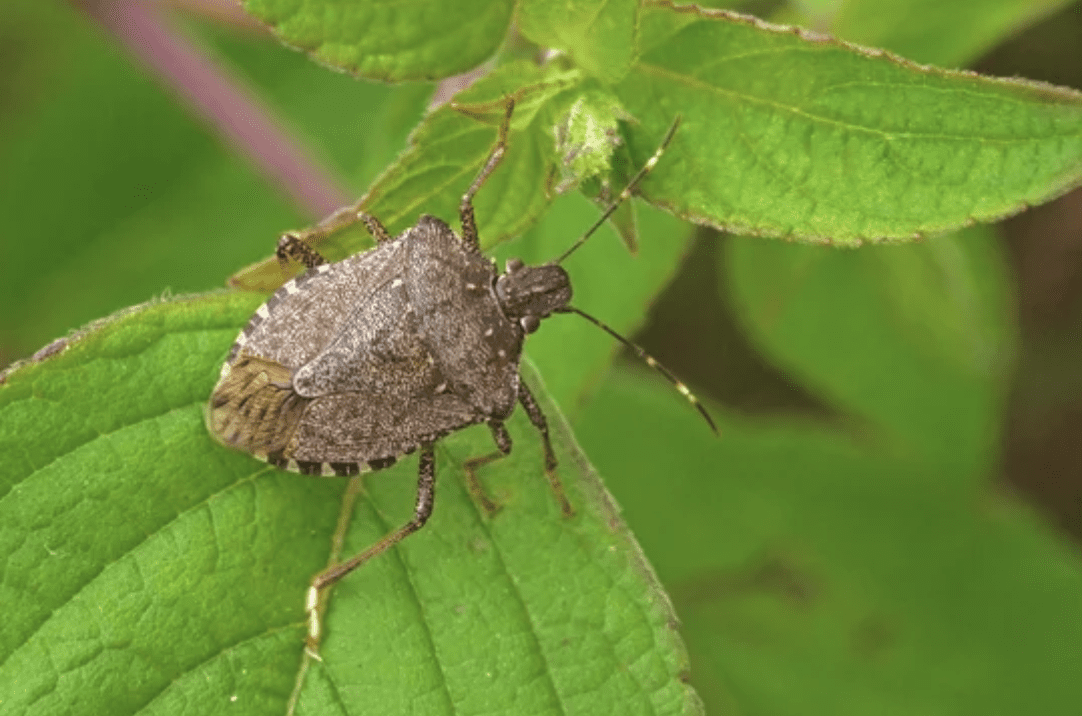
Correct identification is key since stink bugs are often mistaken for other fall invaders. The brown marmorated stink bug (Halyomorpha halys) has distinctive traits:
- Adults: About 5/8 inch long, shield-shaped, mottled brown-grey body.
- Antennae: White bands on the last two segments.
- Abdomen: Alternating black-and-white bands along the edges.
- Shoulders: Smooth, unlike some native stink bugs with spiny edges.
- Nymphs: Start with black heads and reddish-orange abdomens; later develop white bands on legs and antennae.
- Eggs: Laid in clusters of 20–30, light green, barrel-shaped, on leaf undersides.
Common Lookalikes:
- Native Brown Stink Bug – lacks white antennae bands, may have toothed shoulders.
- Western Conifer Seed Bug – longer, narrow body, hind legs with leaf-like flares.
The Stink Bug’s Annual Cycle in Sterling
Sterling’s cooler climate produces one generation per year. Knowing their cycle makes prevention easier.
- Spring (April–May): Adults emerge from hiding and feed on plants.
- Summer (June–August): Females lay eggs; nymphs grow through summer.
- Late Summer/Fall (Aug–Oct): New adults search for winter shelter, causing the annual “invasion.”
Why They Enter Buildings
Stink bugs don’t come inside for food or breeding—they’re seeking winter shelter in a dormant state called diapause.
- Overwintering instinct: In nature, they hide under bark or rocks. In Sterling, homes and offices replace those shelters.
- Aggregation pheromones: One bug signals others, leading to large clusters.
This synchronized behavior creates the heavy fall infestations Sterling residents notice each year.
Seasonal Behavior & Impact
Fall Invasion (Late Aug–Oct)
- Masses appear on sunny building walls.
- Crawl into cracks, gaps, and attics.
- Attracted to lights, often flying into open doors.
Spring Emergence (Apr–May)
- Bugs found indoors are survivors from fall.
- As they “wake up,” they try to leave to feed.
- Each bug indoors in spring signals a past entry point.
Garden Damage
While mostly a nuisance indoors, stink bugs harm local crops. They feed on over 100 plants, damaging tomatoes, apples, peaches, peppers, and berries. Damage shows as corky, discolored spots or misshapen fruit (“cat-facing”).
Risks for Properties in Sterling
Homes
- Annoying, clumsy flyers.
- Release foul odor when crushed.
- No structural damage but significant stress for residents.
Businesses
- Restaurants: Customer complaints, health code risks, possible closures.
- Schools/Daycares: Disturbs students, worries parents, limited chemical options indoors.
- Offices/Managed Properties: Tenant complaints, negative perception, reduced productivity.
Stink bug entry points often overlap with rodent entry points, raising risks of more destructive infestations.
Prevention: Your First Line of Defense
Seal the Structure
- Caulk cracks around windows, doors, siding, and foundations.
- Repair screens; ensure snug fit.
- Install door sweeps.
- Screen attic and gable vents.
Manage the Yard
- Trim shrubs and trees away from buildings.
- Remove leaf litter and debris near foundations.
- Store firewood off the ground and away from walls.
If They Get Inside
- Soapy water: Sweep bugs into a container with soapy water to kill them.
- Vacuuming: Works, but vacuums may retain odor—use a spare unit if possible.
Practical Guide for Homeowners
Quick DIY Checklist for Fall
- Walk around your home and seal visible cracks with silicone caulk.
- Replace worn weatherstripping on doors and windows.
- Check attic vents and chimneys—cover with fine mesh.
- Switch outdoor lights near doors to yellow “bug lights” that attract fewer insects.
Safe Indoor Removal
- Keep a designated handheld vacuum for stink bugs to avoid lingering odors in your main unit.
- Use DIY soapy water traps near windows where bugs cluster.
- Avoid crushing bugs indoors—the odor can spread quickly.
Family & Pet Safety
- Store cleaning supplies and soapy water traps out of reach of children and pets.
- Teach kids not to handle stink bugs directly—they aren’t dangerous but can release odor.
Sterling-Specific Tips
- Many older New England homes have clapboard siding or stone foundations with extra gaps. Inspect these areas carefully.
- Barns, sheds, and detached garages are common entry points—seal them before fall.
- Moist springs and warm summers in Massachusetts can increase stink bug numbers, making fall prevention even more important.
Protecting Your Garden
- Row Covers: Use lightweight fabric covers on vegetable gardens during peak feeding months to prevent stink bugs from reaching crops.
- Hand Removal: On small gardens, inspect plants daily—knock bugs into soapy water.
- Trap Crops: Plant sunflowers or beans along garden edges to lure stink bugs away from tomatoes, peppers, and fruit trees.
- Fruit Trees: Regularly inspect apples, peaches, and pears—thin heavy fruit clusters to reduce hiding spots.
- Fall Clean-Up: Remove weeds, tall grasses, and garden debris where stink bugs hide before winter.
Other Problem Areas for Homeowners
- Attics & Basements: Check insulation gaps and wall voids—these are prime hiding spots.
- Seasonal Storage: Stink bugs often cling to outdoor furniture, holiday decorations, and gardening tools. Inspect and shake items before bringing them inside.
- Garages & Mudrooms: Frequently used entrances are common bug pathways—install weatherstripping and door sweeps.
Common Mistakes to Avoid
- Using indoor pesticides: These are not effective for stink bugs indoors and can be unsafe for families and pets.
- Crushing bugs: Releases a strong odor and may attract more stink bugs.
- Relying only on removal: Sweeping or vacuuming without sealing entry points ensures the cycle repeats.
- Ignoring spring sightings: Bugs seen in spring are proof of fall entry—use them as clues for sealing weak spots.
- Leaving outdoor lights on: Bright lights near doors and windows draw stink bugs directly to entry points.
Seasonal Prevention Calendar
- Spring (Mar–May): Note indoor sightings to identify entry points; inspect winter damage.
- Summer (Jun–Aug): Re-caulk cracks, repair screens, trim vegetation.
- Fall (Late Aug–Oct): Critical prevention window. Check seals, minimize outdoor lighting, schedule professional perimeter treatment.
- Winter (Nov–Feb): Bugs are dormant; review and plan prevention steps.
Download a Stink Bug Preventative Checklist
PESTalytix Professional Management
Integrated Pest Management (IPM)
Our approach focuses on long-term prevention with minimal environmental impact, combining exclusion, monitoring, and targeted treatments.
Our Proven Process
- Inspection – Identify vulnerabilities and entry points.
- Exterior Treatment – EPA-approved perimeter protection in late summer/fall.
- Exclusion & Fortification – Seal gaps with professional-grade materials.
- Ongoing Monitoring – Regular follow-ups and monitoring devices for continued defense.
[]