
We Service Your Existing Bait Stations
Already have bait stations installed by a previous company? We’ll take over the program without replacing equipment you’ve already paid for.
What we do:
- Check all stations on your schedule (weekly, biweekly, monthly)
- Rotate bait to maintain freshness and prevent bait shyness
- Document which stations show activity
- Refill consumed bait
- Report damage, tampering, or station malfunction
- Provide written service logs for health inspectors
Why switch to us:
Most commercial pest control companies send different techs every visit. You get a rotating cast of people who don’t know your building. We identify the hot zones for rodents and actively pivot treatment.
You also get direct phone access to your tech, not a call center. When you have questions about what the service report means, you talk to the person who was actually there. Contact us today and we can discuss your options.
The Problem with Calendar-Based Bait Station Checks
Most commercial pest control works like this: A technician visits on a fixed schedule (monthly), checks every bait station whether it needs it or not, refills bait, and leaves. You pay the same price whether they found activity or not.
Here’s what that approach misses:
Bait stations emptied weeks ago from rodent pressure and now mice are in your building.
Wasted Service Time: In a typical 20-station setup, 12-15 stations show zero activity on any given visit. Your tech spends time checking stations that don’t need checking.
Delayed Detection: Monthly visits mean rodents could be active for 3-4 weeks before anyone notices. By then, you might have droppings in storage areas or a health inspector finding evidence.
No Accountability: When an inspector asks “How do you know your rodent program is working?” the answer is usually “We check monthly.” That’s not data. That’s hope.
Surprise Audit Failures: You find out about rodent pressure when the health inspector finds droppings, not when your pest control company detects early warning signs.
How does your current pest control provider validate their service? We can in 2 mins and provide audit proof data fro your auditor.
How Digital Monitored Bait Stations Work
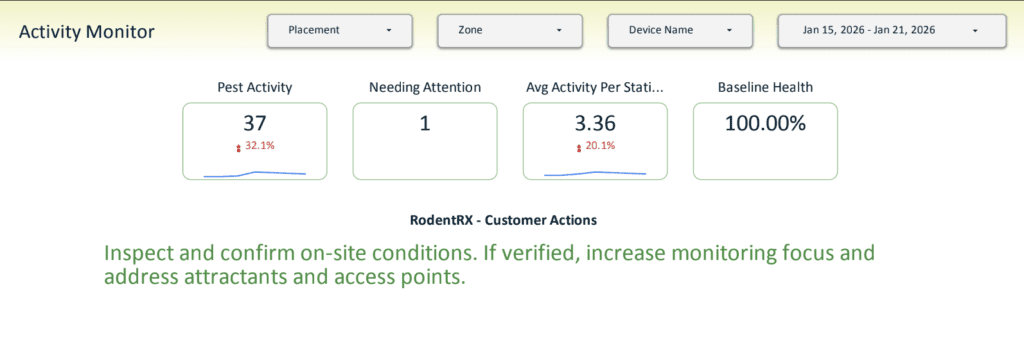
We equip bait stations with activity sensors that track rodent visits 24/7. Each station gets a baseline based on its specific location (exterior vs interior, kitchen vs loading dock, high-traffic vs storage).
When activity at a station exceeds that baseline, you get a notification. Not “rodents were detected sometime this month.” Specific data: which station, what day, how many visits, how that compares to normal.
What this means for you:
- Techs respond to real activity instead of checking stations hoping to find something
- You see the data showing which areas have pressure and which don’t
- Auditors get documentation proving continuous monitoring between service visits
- You pay for service when there’s an actual problem, not just because it’s Tuesday
Service Implementation Options
Completely personalized to your property and needs.
Traditional Service (Basic Rodent Control)
We service your existing stations or install new ones. Monthly or biweekly visits. Tech checks all stations, rotates bait, documents activity, provides service logs.
Best for: Properties starting a bait station program or switching from another provider.
Pricing: $100-450/month depending on station count and visit frequency.
Digital Pest Monitored Service (Premium)
Same program but with sensors in each station. Tech visits only when data confirms activity. You see real-time pressure trends.
Best for: Properties tired of paying for service visits that find nothing, or facilities needing audit-ready documentation between scheduled inspections.
Pricing: Setup fee + monthly monitoring + per-visit service charge.
The Service Basics
Rodents spread disease, damage structures, and contaminate food. In Worcester County, bait stations offer an effective and responsible way to control rats and mice while keeping people and pets safe.
What Bait Stations Do
A bait station holds rodent bait in a locked container. It keeps the bait fresh, dry, and out of reach of children and animals. Rodents enter through small openings, eat the bait, and return to their nests. This approach targets the source of the problem instead of temporary surface activity.
Where We Place Bait Stations
We place bait stations where rodents move and feed. Common areas include building exteriors, along walls, near dumpsters, and inside basements. In older Worcester homes and restaurants, gaps near pipes and foundation cracks are key spots. On farms and near water, we install stations near burrows, storage areas, and feed rooms. Strategically placed to intercept rodents.
Safe and Compliant Service
We use tamper-resistant stations and follow Massachusetts regulations for rodenticide use. Every installation includes clear labeling and service documentation. Our technicians inspect each station during regular visits and replace bait when needed.
Ongoing Monitoring
We check every station for signs of activity and adjust placement when patterns change. Monitoring blocks help track rodent movement. This keeps control consistent and prevents future infestations.
Reducing Risk
Bait stations are one part of an integrated pest management plan. We also seal entry points, remove clutter, and advise on proper waste handling. These steps lower the chances of rodents returning.
Who This Works For
Restaurants & Food Service: Health inspectors care about documented monitoring. Traditional service gives you monthly check logs. Sensor monitoring gives you 24/7 activity data proving you’re watching between inspections.
Multi-Family Housing: Property managers with multiple buildings can’t visit every property monthly. The dashboard shows which buildings have rodent activity without leaving your office.
Warehousing & Distribution: Large facilities with 40+ stations waste thousands checking empty stations. Sensor monitoring shows you exactly where pressure is building.
Healthcare Facilities: Joint Commission and CMS want proof of continuous monitoring. Sensor logs provide that proof.
Frequently Asked Questions
Can you take over our existing bait station contract mid-term?
Yes. You don’t need to wait until contract expiration. We can also service stations installed by another company without replacing equipment you’ve already paid for.
What if we already have tamper-resistant stations installed?
We service any standard commercial bait station. If your current provider installed stations, we’ll use those. If stations are damaged or malfunctioning, we’ll replace as needed.
Do you service weekly, biweekly, or monthly?
We offer all frequencies. Most restaurants need biweekly service. Most warehouses and multi-family properties use monthly. We’ll recommend a frequency based on your building type and current rodent pressure.
What happens if you find rodent activity between scheduled visits?
With traditional service: You wait until the next scheduled visit unless it’s an emergency, then we charge extra for an unscheduled service call.
With sensor monitoring: You get an alert within 24 hours of increased activity, and we can schedule service before it becomes an emergency.
How do sensors not interfere with our network or WiFi?
The sensors use cellular connectivity (same as your phone). They don’t touch your WiFi, don’t require IT setup, and work in basements or areas where WiFi doesn’t reach. No IT involvement needed.
What if health inspectors ask about the sensors?
The sensors demonstrate proactive monitoring, which health inspectors want to see. You can show them the activity dashboard proving you’re monitoring 24/7, not just during monthly visits.
Can we try sensor monitoring on just a few stations first?
Yes. That’s our hybrid approach. We add sensors to high-activity areas (loading dock, trash area) while maintaining traditional monthly service for other stations. After 60-90 days, you’ll see the difference and can decide whether to expand.
Do you service properties outside Worcester County?
Our primary service area is Worcester County and the Route 12/I-290 corridor. For large commercial accounts (50+ stations), we’ll extend service to neighboring areas. Call to confirm we cover your location.
What credentials do your techs have?
All techs are Massachusetts licensed pest control applicators. We carry general liability and workers compensation insurance. We provide proof of insurance for property management companies requiring vendor COI documentation.
How quickly can you start servicing our property?
For traditional bait station service: We can typically start within 1 week of site assessment.
For sensor-monitored service: 2-4 week timeline (sensors ordered, installed, baseline period established).