

Worcester County real estate transactions often require an NPMA-33 Wood-Destroying Insect inspection before closing. Lenders demand this standardized report between March and October when termite swarmers emerge and carpenter ant colonies peak. Missing or incomplete WDI documentation delays closings, spooks buyers, and costs you referrals. PESTalytix provides same-week NPMA-33 inspections across all 60 Worcester County communities with same-day report delivery.
Why Worcester County properties face elevated WDI risk:
- Pre-1900 homes along High Street in Clinton and Upper Common in West Boylston have fieldstone foundations that trap moisture
- Triple-deckers throughout Main South (Worcester) and Water Street (Fitchburg) share structural wood between units
- Lakefront properties on Shrewsbury Street near Quinsigamond and River Road in Sterling face constant humidity
- Clay soils in Auburn, Millbury, and Grafton hold moisture against foundations year-round
Whether you represent buyers, sellers, or both, understanding the NPMA-33 process protects your transactions. This guide covers what the inspection includes, which pests inspectors look for, how long reports take, and what findings mean for your closing timeline.
Schedule a WDI Inspection for your next transaction.
What Is an NPMA-33 WDI Inspection?
The NPMA-33 is a standardized form created by the National Pest Management Association. Lenders require this specific document before approving mortgages. VA and FHA programs are especially strict about WDI documentation. The form reports visible evidence of wood-destroying insects and any damage they caused.
The inspection covers four categories of wood-destroying organisms:
- Termites (Reticulitermes flavipes in Massachusetts)
- Carpenter Ants (Camponotus pennsylvanicus)
- Carpenter Bees (Xylocopa virginica)
- Powder Post Beetles (Lyctidae and Anobiidae families)
| Area Inspected | What We Check | Why It Matters |
|---|---|---|
| Foundation exterior | Mud tubes, wood-soil contact, moisture damage | Primary termite entry points |
| Basement/Crawlspace | Sill plates, joists, supports | Structural wood most at risk |
| Interior rooms | Baseboards, door frames, window sills | Evidence of active infestation |
| Attic | Rafters, sheathing, ventilation | Carpenter ant and beetle damage |
| Exterior wood | Fascia, soffits, deck ledgers, porches | Carpenter bee galleries, rot |
What the NPMA-33 does NOT cover:
- Inaccessible areas (behind finished walls, under insulation)
- Wood-destroying fungi (dry rot, wet rot)
- Other wood-boring insects beyond the four categories
- Moisture damage not caused by insects
For complete details on our WDI inspection service, visit our NPMA-33 WDI Report service page.
Which Wood-Destroying Insects Affect Worcester County Properties?
Worcester County’s geography creates conditions where all four WDI categories thrive. Understanding each pest helps you explain findings to nervous clients and keep transactions moving.
Why Are Termites a Concern in Worcester County?
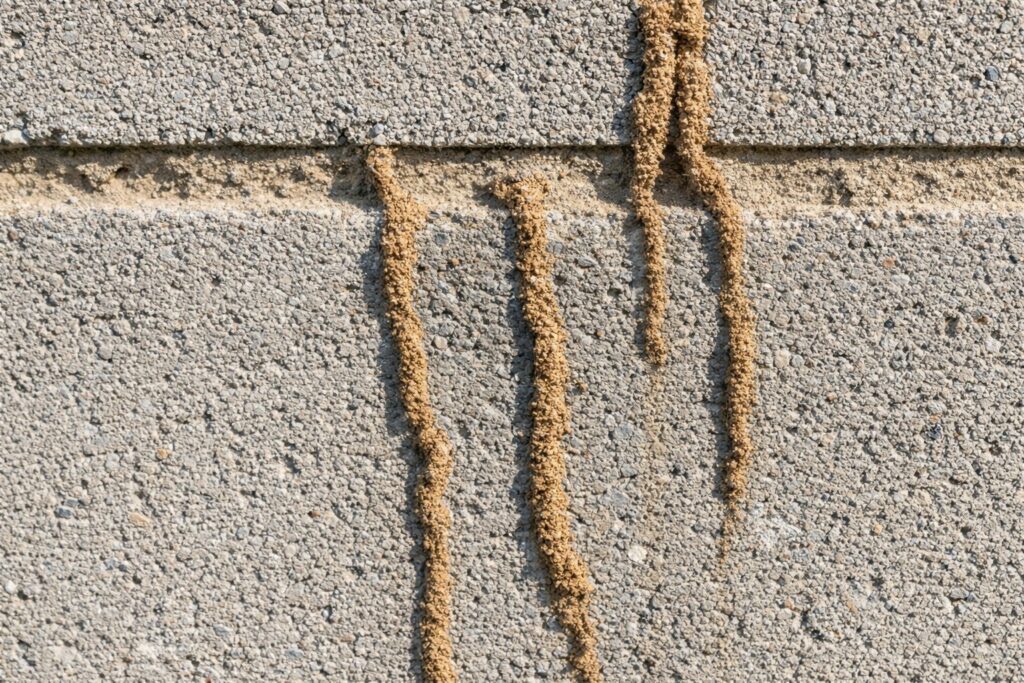
Eastern Subterranean Termites (Reticulitermes flavipes) cause more structural damage than any other insect in Massachusetts. They need soil contact and constant moisture to survive. Worcester County’s clay soils and high water tables provide ideal conditions.
Geographic risk factors:
- Wachusett Reservoir watershed creates elevated groundwater throughout West Boylston, Holden, and Sterling
- Clay soils along Southbridge Street (Auburn) and Grafton Street (Millbury) hold moisture against foundations
- Older homes on Pleasant Street (Clinton) often have wood-to-soil contact at porches and bulkheads
- Finished basements throughout Tatnuck and Greendale hide foundation walls from routine inspection
What inspectors look for:
- Mud tubes on foundation walls (pencil-width tunnels connecting soil to wood)
- Damaged wood that sounds hollow when tapped
- Swarmers (winged termites) or shed wings near windows in spring
- Wood-to-soil contact at porches, deck posts, or additions
What finding termites means for your transaction:
Active termites require treatment before most lenders approve financing. Treatment typically takes 1-2 days. Repair estimates for damage become part of negotiations.
For homeowners dealing with termites, we offer comprehensive termite control services. Additional information about termite behavior is available in our guide to controlling termites in Worcester County homes.
Why Are Carpenter Ants Common in Worcester County?
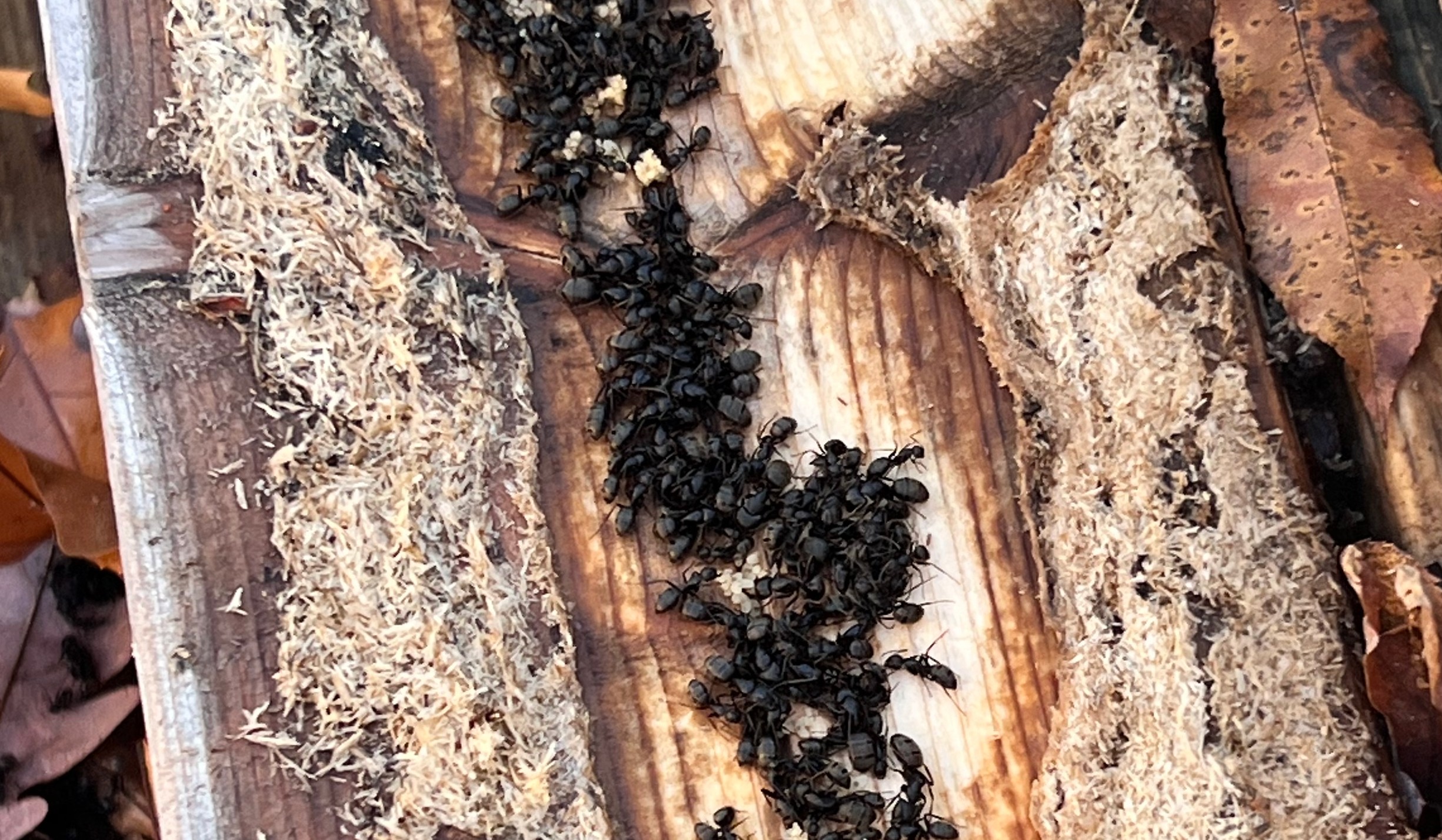
Carpenter ants (Camponotus pennsylvanicus) are the most frequent WDI finding in Worcester County. Unlike termites, they don’t eat wood. They excavate galleries for nesting, leaving behind sawdust-like debris called frass.
Geographic risk factors:
- Oak-hickory forests throughout Bean Porridge Hill Road (Westminster) and Redemption Rock Trail (Princeton) provide natural habitat
- Lakefront properties along Shore Drive (Lake Quinsigamond) and East Lake Road (Webster) face constant moisture
- Wood shingle siding common in historic districts on Highland Street (Worcester) and Main Street (Lancaster)
- Deck ledger boards trap moisture against house sheathing in newer developments
What inspectors look for:
- Frass piles (sawdust with insect body parts) below wall voids, windows, or soffits
- Rustling sounds inside walls when tapped
- Large black ants (1/4 to 1/2 inch) trailing along foundation or entering structure
- Soft, damaged wood in areas with past moisture problems
What finding carpenter ants means for your transaction:
Carpenter ant findings range from minor to significant. A few ants don’t indicate structural damage. Large frass accumulations or visible galleries suggest established colonies requiring treatment.
Our ant control services address carpenter ant infestations throughout Worcester County. Learn more in our carpenter ant control guide.
Why Do Carpenter Bees Target Certain Properties?
Carpenter bees (Xylocopa virginica) bore perfectly round holes into unpainted or weathered wood. They create nesting galleries inside fascia, deck railings, and porch columns. Individual bees cause minimal damage, but repeated nesting year after year creates cumulative structural concerns.
Geographic risk factors:
- Unpainted fascia boards on homes along Maple Street (Sterling) and Central Street (West Boylston)
- Cedar and redwood trim that weathers without protective finish
- South-facing wood surfaces that absorb heat (especially along south-facing slopes in Paxton and Rutland)
- Historic properties with original wood trim throughout College Hill (Worcester) and Bolton Center
What inspectors look for:
- Perfectly round holes (approximately 1/2 inch diameter) in wood trim
- Sawdust piles beneath holes
- Staining below entrance holes from bee waste
- Multiple holes in the same board (indicates years of nesting)
What finding carpenter bees means for your transaction:
A few holes rarely delay closing. Extensive damage with visible structural compromise may require repair. Lenders typically don’t require treatment unless damage is significant.
Our carpenter bee services protect wood structures from ongoing damage. Read our complete guide to controlling carpenter bees in Worcester County.
How Do Powder Post Beetles Affect Older Homes?
Powder post beetles (Lyctidae and Anobiidae families) create tiny exit holes in hardwood. Adults emerge after developing inside the wood for 1-5 years. Their name comes from the fine, powder-like frass they produce.
Geographic risk factors:
- Hardwood flooring in pre-1950 homes along Boylston Street (Worcester) and High Street (Clinton)
- Antique furniture and imported wood products
- Unfinished hardwood in basements and attics of historic properties
- Historic millwork and trim in properties throughout Lancaster Center and Princeton Center
What inspectors look for:
- Pinhole-sized exit holes (1/32 to 1/16 inch) in hardwood
- Fine, flour-like frass beneath holes
- Fresh holes with clean, sharp edges (indicates active infestation)
- Old holes with darkened, weathered edges (indicates past activity)
What finding powder post beetles means for your transaction:
Distinguishing active from inactive infestations matters. Fresh frass and clean-edged holes indicate current activity requiring treatment. Old, weathered holes without fresh frass suggest past problems now resolved.
How Do I Know If a Property Needs Treatment Before Closing?
Not every WDI finding requires treatment. This severity guide helps you set client expectations and keep transactions on track.
| Finding | What It Means | Timeline Impact | Action Needed |
|---|---|---|---|
| No evidence | Clean report | None | Proceed to closing |
| Old damage, no activity | Past issue resolved | Minimal | Lender may request letter confirming no active infestation |
| Minor active infestation | Treatment needed | 3-7 days | Treatment + clearance letter |
| Significant damage | Treatment + repairs | 1-3 weeks | Treatment, repair estimates, possible renegotiation |
| Structural compromise | Major concern | Variable | Structural engineer assessment may be required |
Questions to ask when you receive WDI findings:
- Is the infestation active or evidence of past activity?
- What areas are affected?
- What treatment is recommended?
- What repairs, if any, are needed?
- How quickly can treatment be completed?
- Will you provide documentation for the lender?
What Affects WDI Inspection Cost in Worcester County?
Every property is different. These factors determine inspection scope and time required. Our price is $250
| Factor | Impact on Inspection | Common Examples |
|---|---|---|
| Property size | Larger homes take longer | 3,000+ sq ft properties on Salisbury Street (Worcester) |
| Crawlspace access | Limited access increases time | Older homes on River Road (Sterling) with stone crawlspaces |
| Finished basements | Can’t see foundation walls | Post-war ranches in Tatnuck and Burncoat |
| Multi-family structures | Each unit requires inspection | Triple-deckers on Vernon Street and Main South |
| Vacant properties | Easier access, faster inspection | Foreclosures and estate sales |
| Previous WDI history | May require more detailed review | Properties with prior treatment records |
What’s included in our WDI inspection:
- Complete accessible-area inspection
- NPMA-33 form completion
- Digital report delivery (same-day for most inspections)
- Treatment recommendations if evidence found
- Lender-ready documentation
Request Your WDI Inspection and receive same-week scheduling.
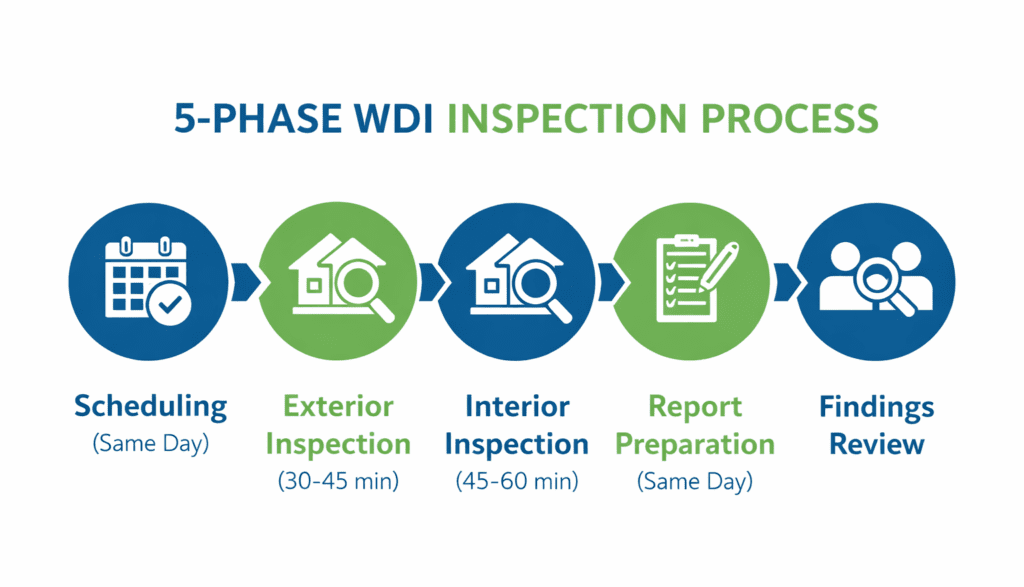
What Happens During a WDI Inspection?
Understanding the process helps you prepare clients and properties for smooth transactions.
| Phase | Duration | What Happens | You Receive |
|---|---|---|---|
| 1. Scheduling | Same day | Confirm property access, utilities, any known concerns | Appointment confirmation + prep checklist |
| 2. Exterior Inspection | 30-45 min | Foundation perimeter, wood-soil contact, exterior wood | Notes on potential concerns |
| 3. Interior Inspection | 45-60 min | Basement, crawlspace, accessible structural wood, attic | Thorough assessment |
| 4. Report Preparation | Same day | Findings documented on NPMA-33 form | Official report (PDF) |
| 5. Findings Review | As needed | Explain findings, answer questions, discuss next steps | Clear understanding for your client |
Preparing the property for inspection:
- Ensure access to basement and crawlspace
- Clear 2-foot perimeter around foundation interior
- Provide attic access (pull-down stairs, hatch)
- Remove items blocking sill plates and rim joists
- Note any known water intrusion history
Why Do Informal WDI Assessments Fail in Real Estate?
Agents sometimes wonder if a pest concern truly requires professional inspection. Here’s why informal assessments create liability and delay closings.
| Attempt | What Happens | Result |
|---|---|---|
| Agent visual check | Sawdust noted, origin unclear | Lender rejects without official NPMA-33 form |
| Seller’s old report | Report over 90 days old | Lender requires current inspection |
| Out-of-state inspector | Unfamiliar with MA regulations | Form may not meet lender requirements |
| Handyman assessment | Not licensed to complete NPMA-33 | Report rejected at closing |
| Total time lost | Multiple failed attempts | 2-3 weeks delay, closing at risk |
What a licensed WDI inspector provides:
- Massachusetts-licensed pesticide applicator credentials
- Liability insurance coverage
- NPMA-33 form completed correctly
- Defensible findings if questions arise later
- Treatment capability if issues discovered
What Should I Know About Worcester County Property Types?
Worcester County’s diversity requires location-specific awareness during WDI inspections.
| Property Type | WDI Concerns | Why It Matters | Our Approach |
|---|---|---|---|
| Wachusett Reservoir area (Sterling, West Boylston, Holden) | DCR watershed restrictions | Treatment materials must be approved for watershed | Compliant materials only; documentation provided |
| Pre-1900 historic homes (High St Clinton, Upper Common West Boylston) | Original timber, limited access | Preservation concerns affect treatment options | Non-invasive inspection methods |
| Lakefront properties (Quinsigamond, Webster, Brookfield) | Elevated moisture, pier foundations | Higher carpenter ant and termite pressure | Schedule before dock installation |
| Multi-family housing (Main South Worcester, Water St Fitchburg) | Multiple units, shared structural wood | Pests travel between units through wall voids | Per-unit inspection + coordination |
| VA/FHA transactions | Strict NPMA-33 requirements | Specific form completion standards | Full compliance documentation |
Regulatory awareness:
Properties within the DCR watershed face material restrictions. This includes much of Sterling, West Boylston, Holden, and parts of Boylston. Our inspectors understand these requirements. Any recommended treatments comply with watershed regulations.
Frequently Asked Questions
How long does a WDI inspection take?
Most single-family inspections take 60-120 minutes. Multi-family properties require additional time per unit. Report delivery is typically same-day.
How much does an NPMA-33 inspection cost?
We charge $250 per inspection and npma-33 wdi report
Does the buyer or seller pay for the WDI inspection?
This varies by transaction and is often negotiated. Many sellers order inspections proactively to identify issues before listing.
What if termites are found right before closing?
Finding termites doesn’t automatically kill the deal. We provide same-week treatment for most infestations. Treatment documentation satisfies lender requirements. Repair negotiations may extend closing by 1-2 weeks in significant cases.
What if the inspection finds evidence of WDI?
Finding evidence doesn’t end the transaction. We provide treatment options, timeline estimates, and documentation to keep deals moving forward.
How current must the WDI report be?
Most lenders accept reports within 90 days of closing. VA loans may have stricter requirements. Confirm with your lender before scheduling.
Can you treat the same day as the inspection?
For minor findings, same-day treatment may be possible. Significant infestations require a treatment plan. We prioritize real estate timelines.
Do you service all of Worcester County?
Yes. We provide WDI inspections in all 60 Worcester County communities, from Auburn to Winchendon.
What if areas are inaccessible?
The NPMA-33 form includes sections to document inaccessible areas. We note these clearly so lenders understand inspection limitations.
Why do VA and FHA loans require WDI inspections?
These government-backed loans protect taxpayer investment. WDI damage can compromise structural integrity and property value. The inspection ensures the collateral (the home) is sound.
Keep Your Closings on Track
A smooth closing depends on getting documentation right the first time. Scheduling your WDI inspection early in the transaction prevents last-minute scrambles.
PESTalytix provides same-week scheduling, same-day reports, and treatment capability when issues arise. Your clients trust you to guide them through the process. When WDI questions come up, having a reliable inspection partner makes the difference.
Schedule Your WDI Inspection or call us directly to discuss your transaction timeline.