

Finding red, itchy bites around your ankles? Cat fleas (Ctenocephalides felis) infest Worcester County homes year-round, with activity spiking in late summer. These tiny jumping insects hitchhike inside on pets, then spread to carpets, furniture, and bedding. A single female lays 40-50 eggs daily. Within weeks, your home becomes a breeding ground. Beyond the bites, fleas transmit tapeworms to pets and cause flea allergy dermatitis—the #1 skin condition veterinarians treat. PESTalytix eliminates fleas at every life stage and stops the cycle before it overwhelms your household.
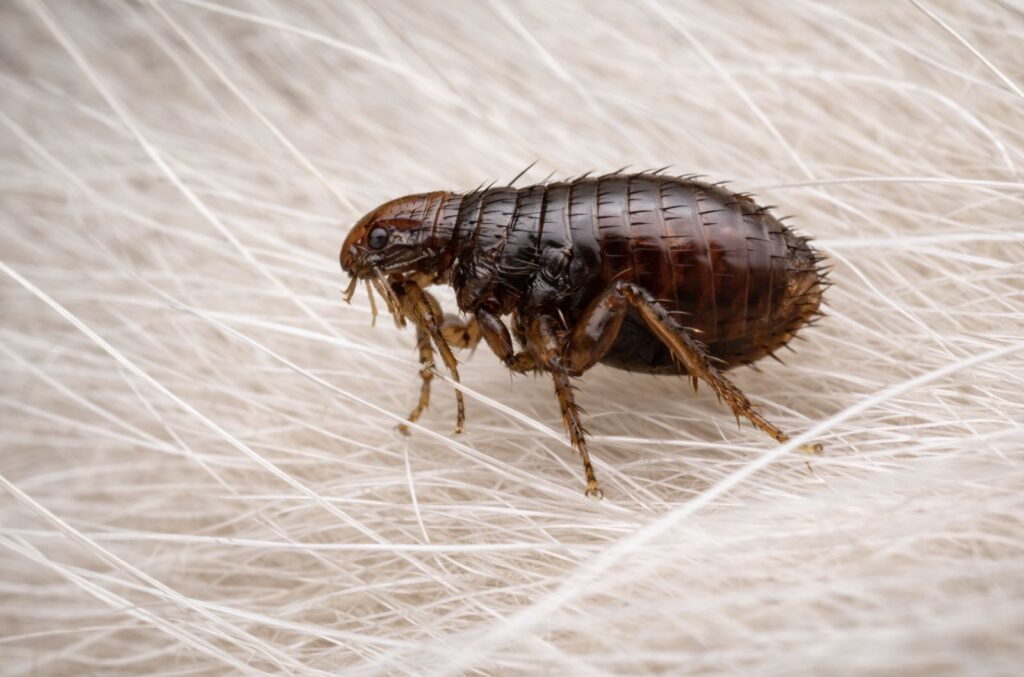
Worcester County Flea Facts
| What You Need to Know | The Data |
|---|---|
| Primary species | Cat flea (Ctenocephalides felis)—infests dogs too |
| Active season | Year-round indoors; outdoor peak July-September |
| Reproduction rate | 40-50 eggs per female per day |
| Lifecycle | Egg to adult in 2-3 weeks (ideal conditions) |
| Cocoon survival | Up to 6 months dormant |
| Health risks | Flea allergy dermatitis, tapeworm transmission, anemia in pets |
| Population split | 95% in environment, only 5% on your pet |
Your dog scratches constantly. Your cat grooms obsessively. You wake up with clusters of bites on your legs. These signs mean fleas have established themselves in your home. The problem isn’t just your pet. It’s your carpet, your couch, and every crack in your hardwood floors.
Why does treating your pet alone fail? Fleas spend 95% of their lifecycle off your pet. Eggs fall into carpet fibers. Larvae hide in floor cracks. Cocoons wait months for a host. You need treatment that reaches every stage, not just the adults you see. See our flea treatment prep checklists to prepare for professional treatment from pestalytix.
How Do I Know If I Have Fleas?
Fleas leave clear signs on your pets and in your home. Look for three types of evidence: what you see on pets, what you find in your home, and bites on family members.
On Your Pets:
- Excessive scratching, especially around neck, base of tail, and belly
- Red, irritated skin or hot spots
- Hair loss from constant grooming
- Visible fleas running through fur when parted
- “Flea dirt” (black pepper-like specks) in fur
In Your Home:
- Black specks on pet bedding that turn red when wet (digested blood)
- Tiny dark insects jumping in carpet when disturbed
- Larvae in carpet edges, under furniture, in floor cracks (avoid light)
- White oval eggs (barely visible) in pet resting areas
On Family Members:
- Red, itchy welts around ankles and lower legs
- Bites in clusters or lines
- Bites appear after sitting on infested furniture
- Children may have bites on arms if playing on floor
The Flea Dirt Test
Not sure if those specks are flea dirt or regular dirt? Place specks on a damp white paper towel. Flea dirt turns reddish-brown as the dried blood dissolves. Regular dirt stays dark.
Severity Assessment: When to Act
| What You’re Experiencing | What It Means | Timeline | Action Needed |
|---|---|---|---|
| Pet scratching, no bites on humans | Early infestation, fleas on pet only | 1-2 weeks | Treat pet, monitor home |
| Few bites on ankles, pet scratching | Fleas reproducing, eggs in carpet | 2-3 weeks | Schedule inspection |
| Multiple family members bitten daily | Established infestation, all life stages present | 3-4 weeks | Contact us today |
| Fleas jumping when you walk on carpet | Heavy infestation, population explosion | 4+ weeks | Immediate treatment needed |
Why Do Worcester County Homes Get Fleas?
Fleas don’t appear from nowhere. Understanding how they arrive helps you prevent reinfestation.
Pets Bring Fleas Inside:
Dogs and cats pick up fleas from yards, dog parks, groomers, kennels, and contact with wildlife. One trip outside can start an infestation. Even indoor cats catch fleas from screened porches or visiting dogs.
Wildlife Carries Fleas to Your Property:
Squirrels, raccoons, skunks, and feral cats deposit flea eggs in your yard. Properties near wooded areas in Princeton, Rutland, and Paxton face higher pressure. Homes adjacent to conservation land have ongoing wildlife traffic. Rodents like mice also carry fleas into and around structures.
Humidity Drives Flea Survival:
Fleas thrive in 70-85°F with 70%+ humidity. Worcester County’s summer humidity creates ideal conditions. Lakefront properties near Wachusett Reservoir, Lake Quinsigamond, and Waushacum Ponds see extended flea seasons.
Used Furniture and Rentals:
Flea cocoons survive months in empty homes. Moving into a previously pet-friendly rental triggers emergence. Used rugs, furniture, or pet bedding can harbor dormant cocoons.
Environmental Pressure Factors
| Factor | Why It Increases Flea Pressure | High-Risk Areas |
|---|---|---|
| Wildlife corridors | Deposit eggs in yards | Princeton’s Mountain Road, Rutland’s Muschopauge Road, Paxton’s Richards Avenue, Sterling’s Rowley Hill Road |
| Wooded lot borders | Squirrels, chipmunks, feral cats | Holden’s Malden Street corridor, Hubbardston’s Gardner Road, Bolton’s Main Street |
| Lakefront humidity | Extends flea season | West Boylston’s Oakdale neighborhood, Sterling’s Legate Hill Road, Clinton’s Church Street |
| Multi-pet households | More hosts, faster reproduction | Any property |
| Rentals with pet history | Dormant cocoons reactivate | Worcester’s Vernon Hill, Fitchburg’s Upper Common, Leominster’s North Main Street |
How Are Fleas Spreading Through My House?
Fleas follow your pets. Where pets rest, fleas breed. Understanding the lifecycle shows why treatment must be comprehensive.
The Flea Lifecycle (Why Your Pet’s Treatment Isn’t Enough):
- Adult fleas (5% of population) live on your pet, feeding and laying eggs
- Eggs (50% of population) fall off pet into carpet, bedding, furniture, floor cracks
- Larvae (35% of population) hatch in 2-12 days, hide in dark areas, eat organic debris and flea dirt
- Pupae (10% of population) spin cocoons, can remain dormant 6+ months waiting for a host
The cocoon stage is the problem. Cocoons resist vacuuming, resist pesticides, and only hatch when they detect vibration, heat, or CO2 from a nearby host.
Where Fleas Hide in Your Home
| Location | Why Fleas Choose It | What You’ll Find |
|---|---|---|
| Pet bedding | Warmth, host proximity, eggs accumulate | Flea dirt, adult fleas, eggs |
| Carpet edges | Dark, undisturbed, larvae avoid light | Larvae, cocoons |
| Under furniture | Protected, near pet resting spots | All life stages |
| Hardwood floor cracks | Eggs and larvae fall into gaps | Difficult to reach with vacuum |
| Upholstered furniture | Pets rest here, eggs embed in fabric | Adults, eggs, flea dirt |
| Area rugs | Concentrated pet activity | Heavy infestation often starts here |
Why Isn’t My Flea Treatment Working?
Most Worcester County homeowners try multiple approaches before calling a professional. Here’s why each falls short.
Pet Treatments Only Kill Adults:
Flea collars, spot treatments, and pills kill fleas on your pet. They don’t touch the 95% of the population living in your carpet as eggs, larvae, and cocoons. Your pet keeps getting reinfested from your home.
Vacuuming Misses Cocoons:
Vacuuming removes some eggs and larvae. It doesn’t penetrate cocoon casings. Cocoons cling to carpet fibers. You can vacuum daily and still have fleas emerging weeks later.
Flea Bombs Miss Protected Areas:
Foggers deposit pesticide on surfaces. Fleas hide under furniture, in carpet padding, and in floor cracks. The fog doesn’t reach them. You’ve contaminated your home without solving the problem.
One Treatment Isn’t Enough:
You kill adults and larvae. Cocoons survive. Two weeks later, they hatch. You’re back where you started. Effective treatment requires follow-up to catch emerging adults.
DIY Cost Reality
| Attempt | What You Buy | Cost | Time Spent | Result |
|---|---|---|---|---|
| #1: Pet Store | Flea collar, spot treatment | $30-60 | 2-3 hours | Pet treated, home still infested |
| #2: Hardware Store | Flea bombs, carpet spray | $40-80 | 4-6 hours (prep + application) | Surface treated, cocoons survive |
| #3: Repeat Treatment | More spray, powder, vacuuming | $30-50 | 5-8 hours | Fleas keep emerging |
| Total Before Calling Pro | — | $100-190 | 11-17 hours | Cocoons still hatching |
What Happens During Professional Flea Control?
We follow a proven process that reaches every life stage. Nothing happens without your approval.
| Phase | Duration | What Happens | You Receive |
|---|---|---|---|
| 1. Inspection | Day 1 (1-2 hrs) | Identify infestation severity, locate hot spots, assess pet situation | Findings report + treatment options |
| 2. Planning | Day 1-2 | Develop treatment plan including prep instructions | Written plan with pricing |
| 3. Customer Approval | Flexible | Review plan together, you approve scope | Clear understanding of what’s included |
| 4. Treatment | Scheduled | Apply IGR (insect growth regulator) + adulticide to carpets, furniture, floor cracks | Service documentation + follow-up schedule |
| 5. Follow-Up | 10-14 days later | Second treatment catches newly emerged adults | Status update + recommendations |
What We Use
Professional flea control combines two approaches:
- Adulticide: Kills adult fleas on contact
- IGR (Insect Growth Regulator): Prevents eggs and larvae from developing into adults. Breaks the lifecycle.
The IGR is the key. It provides weeks of residual protection, stopping cocoon survivors from reproducing when they emerge.
Your Prep Work Matters:
Before treatment, you’ll vacuum thoroughly (dispose of bag immediately), wash pet bedding in hot water, and treat your pet. We can’t treat a home where pet treatment hasn’t occurred. The two must happen together.
Learn more about our approach: Flea Control Services
What Special Considerations Apply to Worcester County Properties?
Every Worcester County home has unique factors affecting flea treatment.
Flea Risk by Housing Era
| Housing Era | Why Fleas Thrive | High-Risk Features |
|---|---|---|
| Pre-1950 homes | Wide plank hardwood floors with gaps, original carpeting over subfloor | Floor cracks on Sterling’s Meetinghouse Hill Road trap eggs, difficult to vacuum |
| 1950-1980 colonials | Wall-to-wall carpeting, finished basements with carpet | Deep pile carpet in Holden’s Briarcliff Lane homes harbors all life stages |
| 1990s+ developments | Open floor plans, pet-friendly layouts | Properties on Shrewsbury’s Lake Street with multiple pet households see faster spread |
Homes with Multiple Pets:
More hosts mean faster reproduction and larger populations. Treatment may require additional applications. All pets must be treated simultaneously by your veterinarian.
Properties Near Conservation Land:
Homes bordering DCR land, state forests, or wildlife corridors face ongoing wildlife pressure. Yard treatment reduces reinfestation risk. Ongoing monitoring may be needed.
Lakefront and High-Humidity Properties:
Properties near Wachusett Reservoir, Lake Quinsigamond, or Waushacum Ponds see extended flea seasons. Humidity helps eggs survive and larvae thrive. Treatment timing matters.
Hardwood Floors with Gaps:
Pre-1950 homes in Sterling, Lancaster, and Princeton often have wide plank floors with gaps. Eggs and larvae collect in cracks. We use crack-and-crevice treatment to reach hidden populations.
Rental Properties and Multi-Family:
Fleas spread between units through shared spaces. If one unit has pets, adjacent units can get fleas. We coordinate treatment across affected units in Worcester’s Triple-Deckers and multi-family buildings.
Regulatory Compliance
| Regulation | When It Applies | What It Means for Treatment |
|---|---|---|
| MA State Sanitary Code | Multi-family (3+ units) | Landlords must maintain pest-free conditions, documentation required |
| Pet Treatment Coordination | All properties | Veterinary flea treatment must coincide with home treatment for effectiveness |
| Private Well Setbacks | Properties with wells | Well-water safe products only, buffer distances observed |
| Rental Turnover Protocol | Landlords/property managers | Flea treatment recommended between tenants with pet history |
How Much Does Flea Control Cost?
Every Worcester County property is different. These factors affect your cost. See our flea extermination service. Most services run from $150-400.
Cost Factors (Not Pricing)
| Property Factor | How It Affects Cost | Why It Matters |
|---|---|---|
| Square footage of carpeted area | More area = more product, more time | Fleas infest all carpeted spaces |
| Severity of infestation | Heavy infestations need more product | Population size determines application rate |
| Number of pets | More hosts = faster reproduction | All pets need vet treatment simultaneously |
| Floor type | Hardwood cracks need extra attention | Crack-and-crevice treatment adds time |
| Number of treatments needed | Most need 2; severe cases need 3 | Cocoons hatch over 2-4 weeks |
| Yard treatment | Optional add-on for wildlife pressure | Reduces reinfestation from outside |
Your free inspection includes a detailed quote. No surprises.
How Do I Keep Fleas Out for Good?
Professional treatment eliminates the current infestation. These steps prevent fleas from returning.
Pet Protection (Critical):
- Keep pets on year-round flea prevention (vet-recommended products)
- Check pets after visits to dog parks, groomers, kennels
- Treat all pets simultaneously when fleas appear
- Wash pet bedding weekly in hot water
Home Maintenance:
- Vacuum carpets and upholstered furniture weekly
- Dispose of vacuum bag immediately after use (fleas survive inside)
- Clean under furniture and along carpet edges monthly
- Wash throw rugs and blankets pets use regularly
Yard Management:
- Keep grass short (reduces humidity at ground level)
- Remove leaf litter and debris where wildlife rests
- Discourage wildlife with secured garbage and no pet food outside
- Consider yard treatment if wildlife pressure is high
Frequently Asked Questions
How long does flea treatment take to work?
You’ll see adult flea activity drop within 24-48 hours. However, cocoons continue hatching for 2-4 weeks. That’s why follow-up treatment is essential. Full elimination typically takes 2-4 weeks with proper treatment.
Is flea treatment safe for kids and pets?
Yes, when applied correctly. We use products labeled for residential use. Pets and family members stay off treated surfaces until dry (usually 2-4 hours). Your prep work and our application work together for safe, effective treatment.
Do I need to leave my home during treatment?
You’ll need to vacate during application (about 2-4 hours). This allows proper application and drying time. We’ll provide specific instructions during your inspection.
Why do fleas keep coming back?
Three reasons: untreated pets, missed cocoons, or reinfestation from outside. Cocoons hatch over weeks after treatment. Pets without year-round prevention get reinfested. Wildlife deposits new eggs in your yard. Comprehensive treatment addresses all three.
Do I need to treat my yard for fleas?
It depends on your situation. Homes near wooded areas, with wildlife traffic, or where pets spend significant outdoor time benefit from yard treatment. We’ll assess during your inspection.
Can fleas infest a home without pets?
Yes. Flea cocoons survive months in vacant homes. Moving into a previously pet-friendly rental can trigger mass emergence when vibration and CO2 signal new hosts. Wildlife like squirrels and raccoons can also deposit fleas near your home.
Protect Your Worcester County Home Today
Fleas don’t wait. Every day they’re in your carpet, they’re laying eggs, biting your family, and making your pets miserable. One female produces 2,000 eggs in her lifetime.
PESTalytix serves homeowners across Worcester County. From Sterling to Shrewsbury, Holden to Hudson, we eliminate fleas at every life stage. Our inspection is free. Our quote is honest. Our treatment breaks the cycle.