

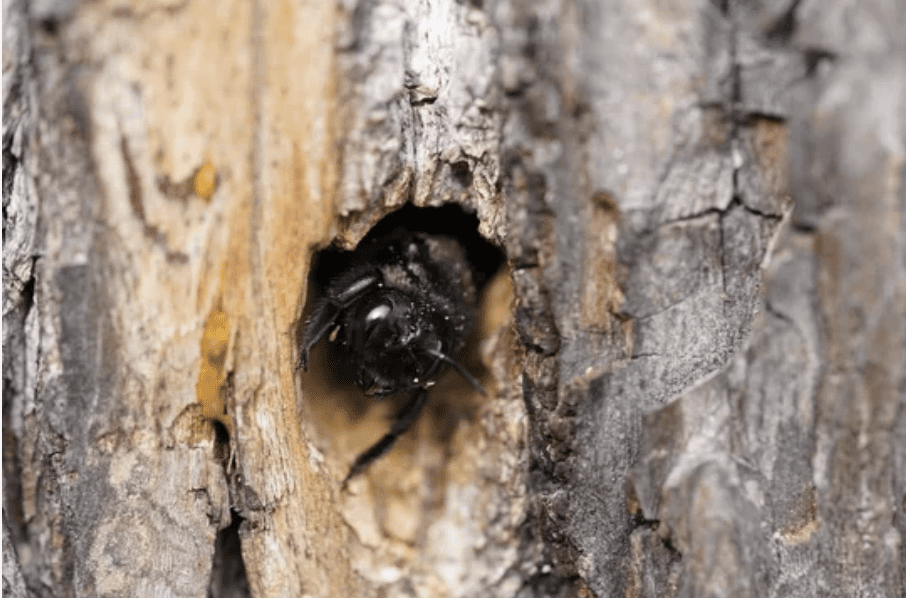
Finding perfectly round holes in your deck rails or fascia boards? You’re not imagining things—and you’re not the only Worcester County homeowner dealing with this. Carpenter bees (Xylocopa virginica) bore into unpainted or weathered wood every spring, typically April through June when temperatures reach 70°F.Be sure to checkout our complete guide on Worcester pest control.
Here’s what you’re facing: those half-inch holes lead to tunnels up to 10 inches deep where females lay eggs. One pair becomes many—each generation expands existing galleries, weakening your wood. Untreated infestations lead to $300-$1,500+ in repair costs as galleries multiply and woodpeckers cause secondary damage. From Sterling’s lakefront decks to Worcester’s historic porches, this is a problem that compounds year after year. PESTalytix treats active galleries and helps you protect vulnerable wood before more damage occurs. Schedule your free inspection today.
You see large, black-and-yellow bees hovering near your deck. A male dive-bombs you when you approach. You find small piles of sawdust below your fascia. These signs mean carpenter bees have chosen your home for nesting.
Why do carpenter bees cause concern? They don’t eat wood like termites, but they drill into it. Year after year, galleries expand. Woodpeckers attack infested wood to reach larvae, causing additional damage. Untreated, structural wood weakens.
Quick Reference: Worcester County Carpenter Bee Facts
| Fact | Detail |
|---|---|
| Species | Eastern carpenter bee (Xylocopa virginica) |
| Active Season | April through June; peak activity in May |
| Entry Hole Size | ½ inch diameter (pencil-width) |
| Gallery Depth | 4-10 inches along wood grain |
| Repair Costs | $300-$1,500+ if untreated for multiple years |
| Secondary Damage | Woodpeckers excavate to reach larvae |
| DIY Success Rate | Low—sprays kill adults but larvae survive |
| Treatment Timeline | Spring treatment most effective |
How Do I Know If I Have Carpenter Bees?
Carpenter bees are often mistaken for bumblebees. Knowing the difference and spotting the signs helps you act before damage accumulates.
Identifying Carpenter Bees vs. Bumblebees:
| Feature | Carpenter Bee | Bumblebee |
|---|---|---|
| Abdomen | Shiny, black, hairless | Fuzzy, yellow and black stripes |
| Size | About 1 inch | About ¾ inch |
| Behavior | Hover near wood, territorial | Fly from flower to flower |
| Nesting | Drill holes in wood | Nest in ground or cavities |
| Social | Solitary (each female has own gallery) | Social colonies |
What You’ll See:
- Perfectly round holes, about ½ inch diameter (pencil-width)
- Holes drilled into underside of horizontal surfaces (deck rails, fascia, soffits)
- Coarse sawdust (frass) below entry holes
- Yellow-brown staining around hole entrance (fecal matter)
- Woodpecker damage near holes (birds hunting larvae)
What You’ll Hear:
- Loud buzzing near wood surfaces
- Faint rasping sound from inside wood (larva feeding)
Behavior You’ll Notice:
- Males hovering aggressively near nest sites (they can’t sting)
- Females entering and exiting holes (they can sting but rarely do)
- Activity peaks in spring (April-May) when new adults emerge
Where to Check First
| Location | Why They Choose It | What You’ll Find |
|---|---|---|
| Deck rails and posts | Horizontal, often unpainted underneath | Entry holes on underside |
| Fascia boards | Softwood, often weathered | Holes and sawdust |
| Soffits and eaves | Protected from rain | Entry holes, staining |
| Wooden outdoor furniture | Unpainted, accessible | Holes in rails, armrests |
| Fence posts and gates | Weathered, untreated | Entry holes, sawdust |
| Wooden playground equipment | Softwood, often unsealed | Holes in beams, posts |
Severity Assessment: When to Act
| What You’re Experiencing | What It Means | Timeline | Action Needed |
|---|---|---|---|
| 1-2 holes, new sawdust | New gallery, single female | Current season | Schedule treatment soon |
| 3-5 holes in same area | Multiple females, or multi-year use | 1-2 years | Schedule inspection |
| Multiple holes + woodpecker damage | Established infestation, larvae attracting birds | 2+ years | Call today. Damage progressing |
| Wood feels soft or spongy near holes | Structural weakening | Multiple years | Call today. Repair may be needed |
Why Do Worcester County Homes Attract Carpenter Bees?
Carpenter bees seek specific conditions. Understanding what attracts them helps you protect vulnerable wood.
Unpainted or Weathered Wood: Carpenter bees prefer bare, untreated, or weathered softwood. Cedar, pine, redwood, and fir are favorites. That beautiful unpainted cedar deck is a target. Stained wood with no topcoat is still vulnerable.
Southern and Western Exposures: Sun-warmed wood attracts nesting females. South-facing deck rails, west-facing fascia, and sunny fence lines see more activity.
Existing Galleries: Carpenter bees return to successful nesting sites. Daughters often enlarge mother’s galleries or drill nearby. A property with old damage attracts new activity.
Softwood Construction: Many Worcester County decks, porches, and outdoor structures use softwood lumber. Homes in Sterling, Princeton, and Holden with extensive deck areas provide abundant nesting opportunities.
Environmental Pressure Factors
| Factor | Why It Attracts Carpenter Bees | High-Risk Areas |
|---|---|---|
| Unpainted decks | Preferred nesting surface | Lakeshore Drive in Sterling; Redemption Rock Trail properties; Wachusett Street in Holden |
| Older structures | Weathered, unpainted wood | Main Street in Lancaster; High Street in Clinton; Crown Street in Worcester |
| Large wooden structures | More nesting opportunities | Reservoir Street in Holden; Barre Paxton Road in Rutland; Pleasant Street in Paxton |
| Previous infestations | Pheromones and existing galleries | Properties with untreated old damage |
| South/west exposures | Warmer wood attracts females | Any property |
How Are Carpenter Bees Damaging My Wood?
Understanding the lifecycle shows why damage accumulates over time.
Gallery Construction: Female carpenter bees drill a perfectly round entrance hole, then turn 90 degrees to excavate a tunnel along the wood grain. Each gallery runs 4-10 inches. She creates 6-10 cells inside, provisioning each with pollen and laying an egg.
Multi-Year Expansion: New adults emerge in late summer, overwinter in galleries, and emerge the following spring. Females often expand existing galleries or drill new ones nearby. Year after year, the network grows.
Secondary Damage: Woodpeckers hear larvae feeding inside galleries. They excavate large, irregular holes to reach them, causing far more visible damage than the bees themselves.
Damage Progression
| Year | Gallery Condition | Visible Damage | Structural Concern |
|---|---|---|---|
| 1 | Single tunnel, 4-6 inches | One clean hole, sawdust | Cosmetic only |
| 2-3 | Expanded tunnel, branching | Multiple holes, some staining | Minor weakening |
| 4-5 | Complex network, nearby galleries | Cluster of holes, woodpecker damage | Moderate weakening |
| 5+ | Extensive galleries, soft wood | Obvious damage, splitting | May need replacement |
Housing Type Vulnerabilities
| Structure Type | Common Problem Areas | Why Vulnerable |
|---|---|---|
| Pressure-treated decks (Shrewsbury subdivisions, Holden developments) | Rails, posts, stair stringers | Underside often not painted |
| Cedar decks and pergolas (Sterling, Princeton lakefront properties) | All horizontal surfaces | Bare wood preferred |
| Historic outbuildings (Lancaster barns, Sterling farmsteads) | Fascia, soffits, door frames | Old, weathered softwood |
| Wooden playsets | Beams, swing supports | Often left natural |
| Split-rail fencing | Rail ends, posts | Unsealed softwood |
Why Isn’t My Carpenter Bee Treatment Working?
Many homeowners try to address carpenter bees themselves. Here’s why common approaches fall short.
Spraying the Entrance Doesn’t Reach Larvae: You spray aerosol into the hole. It kills adults near the entrance. Larvae deep in the gallery survive, emerge next year, and the cycle continues.
Plugging Holes Traps Bees Inside: You fill holes with caulk or dowels. Bees inside chew new exit holes, causing more damage. Or they die inside, attracting carpet beetles and other pests.
Timing Matters: Treating in summer misses the window. By then, eggs are laid and larvae are developing deep in galleries. Spring treatment (April-May) catches active adults.
Wood Protection Alone Isn’t Enough: You paint the deck. Carpenter bees may drill anyway or move to another unpainted surface. Paint helps prevent new attacks but doesn’t address existing galleries.
DIY Cost Reality
| Attempt | What You Buy | Cost | Time Spent | Result |
|---|---|---|---|---|
| #1: Aerosol Spray | Wasp/bee spray | $8-15 | 1-2 hours | Kills some adults, larvae survive |
| #2: Plugging Holes | Dowels, caulk, paint | $20-40 | 3-5 hours | Bees chew new exits or die inside |
| #3: Full Deck Paint | Paint, supplies | $100-300 | 8-16 hours | Helps prevention, doesn’t treat existing |
| Total DIY | — | $128-355 | 12-23 hours | Damage continues next year |
What Happens During Professional Carpenter Bee Control?
We follow a targeted process that eliminates active galleries and breaks the cycle. Nothing happens without your approval.
| Phase | Duration | What Happens | You Receive |
|---|---|---|---|
| 1. Inspection | Day 1 (30-60 min) | Locate all active galleries, assess damage extent | Findings report + treatment options |
| 2. Planning | Day 1 | Develop treatment plan, discuss repair options | Written plan with pricing |
| 3. Customer Approval | Flexible | Review plan, you approve scope | Clear understanding of approach |
| 4. Treatment | Scheduled (spring optimal) | Apply dust into each gallery at dusk | Service documentation |
| 5. Sealing | 24-48 hours post-treatment | Plug holes with dowels and exterior caulk | Prevents reuse |
| 6. Prevention Advice | At treatment | Recommendations for painting/sealing | Prevention checklist |
How We Treat
Dust Application: We apply residual dust directly into each gallery. Bees contact dust entering and exiting. Residual action kills emerging adults for weeks.
Timing: Treatment at dusk ensures bees are in galleries. Spring treatment (April-May) catches the primary nesting season. Fall treatment catches overwintering adults before spring.
Gallery Sealing: After confirming no activity (24-48 hours), we plug holes with wooden dowels and exterior caulk. This prevents reuse and discourages new drilling nearby.
Damage Assessment: We identify galleries that have compromised structural integrity. Some wood may need repair or replacement. We recommend qualified carpenters for structural work.
Regulatory Compliance
Depending on your property location, different regulations may apply:
| Regulation | When It Applies | What It Means for You |
|---|---|---|
| DCR Watershed Protection | Properties near Wachusett Reservoir (West Boylston, Holden, Sterling) | Reduced-risk materials required; we use DCR-compliant products |
| MA Wetlands Protection Act | Within 100 feet of wetlands, ponds, or streams | Buffer zone restrictions; targeted application methods |
| Private Well Considerations | Properties with private wells | Well-water safe products used |
Learn more about our approach: Wasp & Hornet Control Services
What Special Considerations Apply to Worcester County Properties?
Every Worcester County property has unique factors affecting carpenter bee pressure.
Historic Homes with Original Wood: Pre-1950 homes in Sterling, Lancaster, and Princeton often have original fascia, soffits, and trim. Carpenter bee galleries accumulate over decades. Treatment protects original materials. We avoid approaches that require replacing historic wood.
Properties with Extensive Decking: Large deck structures provide abundant nesting opportunities. Homes in Holden, Rutland, and Paxton with multi-level decks or attached pergolas need comprehensive inspection. Multiple treatments may be needed.
Cedar and Natural-Finish Structures: Unpainted cedar decks and pergolas are prime targets. These structures require either painting or regular treatment to remain protected.
Playsets and Outdoor Structures: Wooden playground equipment, gazebos, and sheds often go untreated for years. Families discover infestations when children notice buzzing. We prioritize treating structures near play areas.
Properties with Previous Infestations: If carpenter bees nested last year, they’ll return this year. Pheromones mark successful sites. Annual monitoring catches new activity early.
How Much Does Carpenter Bee Control Cost?
Every Worcester County property is different. These factors affect your cost.
Cost Factors (Not Pricing)
| Property Factor | How It Affects Cost | Why It Matters |
|---|---|---|
| Number of galleries | More holes = more treatment time | Each gallery needs individual attention |
| Structure size | Larger decks/fascia = more inspection time | More surfaces to check |
| Accessibility | Second-story fascia needs ladder work | Height adds complexity |
| Damage extent | Severe damage may need repair assessment | Structural concerns require evaluation |
| Sealing work | Plugging holes after treatment | Prevents reuse, adds time |
| Prevention plan | Painting/staining recommendations | Long-term protection |
Your free inspection includes a detailed quote. No surprises. Schedule your inspection today.
How Do I Protect My Wood from Carpenter Bees?
Professional treatment eliminates current infestations. These steps prevent future problems.
Paint or Finish Exposed Wood (Most Effective):
- Paint fascia, soffits, and trim with exterior latex paint
- Stain alone isn’t enough; add polyurethane or clear finish
- Pay special attention to undersides of rails and beams
- Repaint when finish shows wear (every 3-5 years)
Alternative Protection:
- Apply exterior-grade wood preservative annually
- Install aluminum or vinyl fascia covers over wood
- Replace softwood with composite or PVC materials when rebuilding
Monitoring:
- Inspect deck rails, fascia, and trim each April
- Look for new sawdust below horizontal surfaces
- Watch for hovering bees near wood structures
- Treat new activity promptly before galleries develop
Discourage Nesting:
- Hang carpenter bee traps near previous activity (reduces population)
- Play loud music or run vibrating equipment near wood (disrupts nesting)
Frequently Asked Questions
Do carpenter bees sting?
Female carpenter bees can sting but rarely do. They’re focused on nesting, not defending. Males hover aggressively and may dive-bomb you, but males cannot sting. They’re territorial, not dangerous.
Will carpenter bees eat my house?
No. Carpenter bees don’t eat wood. They excavate galleries for nesting. The wood shavings (frass) are discarded. Damage comes from tunneling, not consumption. However, galleries do weaken wood over time.
Can I just paint over the holes?
Don’t paint over active galleries. Bees will chew new exits, causing more damage. Treat first, wait for activity to stop, then plug with dowels and caulk, then paint.
Why do woodpeckers attack my deck?
Woodpeckers hear carpenter bee larvae feeding inside galleries. They excavate to reach the larvae, causing visible damage far worse than the original bee holes. Treating carpenter bees stops woodpecker damage too.
When is the best time to treat?
Spring (April-May) when adults emerge and begin nesting is optimal. Fall treatment catches overwintering adults before spring. Summer treatment is less effective because larvae are deep in galleries.
How do I know if galleries are still active?
Fresh sawdust below holes indicates current activity. Buzzing inside the wood confirms active larvae. Holes with weathered, darkened edges and no sawdust are likely old and inactive. We verify activity during inspection
Protect Your Worcester County Home Today
Carpenter bees don’t cause dramatic damage overnight. But year after year, galleries expand, wood weakens, and repair costs grow. Woodpeckers compound the damage.
PESTalytix serves homeowners across Worcester County. From Sterling to Shrewsbury, Holden to Hudson, we treat carpenter bee galleries and help you protect your wood. Our inspection is free. Our treatment is timed for maximum effectiveness. Your deck, fascia, and outdoor structures stay sound.