
What Is Intelligent Pest Management?
Intelligent Pest Management is our approach to every pest problem, not just one type.
Most pest control operates on autopilot. Technician shows up on a schedule, sprays the same spots, checks a few traps, sends an invoice. Whether you have pests or not. Whether the treatment makes sense for your property or not.
We operate on information. Before we treat anything, we want to know:
- What’s actually happening on your property right now?
- Why are pests choosing your property over your neighbor’s?
- What’s the safest, most effective way to solve this specific problem?
- How do we verify it actually worked?
That thinking applies whether we’re dealing with mice in your basement, termites in your foundation, carpenter ants in your bathroom wall, or mosquitoes in your backyard.
This page explains how that works across different pest types and situations.
← Back to About PESTalytix for our full story and Worcester County expertise.
Five Ways We Use Data
1. Digital Monitoring for Rodents
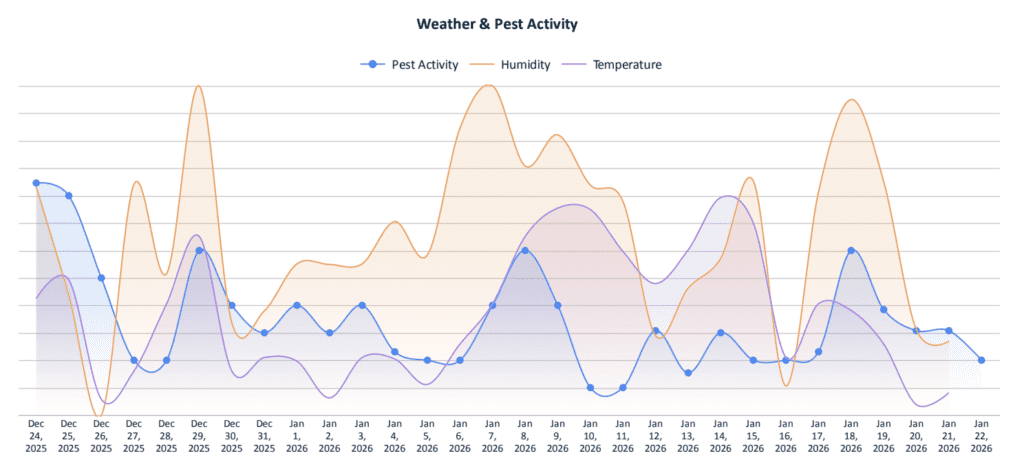
For mice and rats, we install sensors that track activity at each monitoring station. Instead of checking traps once a month and guessing, we know exactly what’s happening between visits.
How it works:
The sensors learn what’s normal for each location on your property. A station near your woodpile might see a few visits per week. Your basement should see zero. When activity patterns change (visits increasing, return intervals shortening, multiple stations showing coordinated activity), we know something shifted.
What this means for you:
We catch pressure building 2-4 weeks before you’d see droppings or hear scratching. Treatment happens when data confirms it’s needed, not on an arbitrary calendar. After treatment, sensors verify the problem is actually solved.
→ Learn more about rodent monitoring
2. Thermal Imaging for Hidden Problems
Our FLIR cameras see what your eyes can’t. We use thermal imaging for:
Finding entry points
Cold air leaking through a crack in January shows up clearly on thermal. That crack is how mice are getting in. We find gaps in foundations, around pipes, at rooflines, and in places you’d never think to look. No drilling test holes. No guessing.
Locating hidden infestations
Carpenter ant colonies generate heat. So do large rodent nests. Termite activity creates moisture patterns. A thermal camera pointed at your wall can show us activity happening inside without tearing anything apart.
Identifying moisture problems
Many pests (termites, carpenter ants, silverfish, cockroaches) need moisture. Thermal imaging reveals wet spots behind walls, under floors, and in crawlspaces. Fix the moisture and you remove what attracted them in the first place.
Checking insulation gaps
Poor insulation means temperature differences that pests exploit. The same scan that finds pest entry points also shows where you’re losing heat. Some customers use our thermal reports for energy efficiency improvements.
We use thermal imaging during inspections for mice, rats, termites, carpenter ants, and any situation where we suspect hidden activity.
3. Environmental-Smart Yard Treatments
Mosquitoes, ticks, fleas, and other outdoor pests need yard treatment. But your yard isn’t just grass. You have a vegetable garden. A well. A stream at the property edge. Kids and dogs who play outside.
How we handle this:
Before we treat, we map your property. Where’s the garden? Where’s the well? Any water features, streams, or wetland buffers? What’s the wind pattern today? Is rain coming?
Then we treat strategically:
- Buffer zones around vegetable gardens (we won’t spray where you grow food)
- Setbacks from wells and water sources (protecting your drinking water)
- Timing around weather (treating before rain washes product away is pointless)
- Targeting where pests actually rest (shaded areas, tall grass, brush piles) instead of blanket spraying everything
Why this matters:
Dumping product everywhere is lazy. It wastes material, costs you more, and puts chemicals where they don’t need to be. We treat where pests are, protect what matters to you, and time applications for maximum effectiveness.
→ Learn about mosquito and tick treatments
4. Seasonal and Environmental Intelligence
Worcester County pest pressure follows patterns. We track those patterns so we can get ahead of problems instead of reacting to them.
What we monitor:
- Soil temperature: Termites swarm when soil hits 70°F at 6-inch depth. We know when that’s coming in your specific area.
- Degree days: Tick emergence follows accumulated heat units, not calendar dates. Sterling’s timing differs from Worcester’s.
- Temperature drops: Mice start scouting entry points when overnight lows hit 50°F. They move inside when it drops further. October in Worcester County means rodent prevention, not rodent reaction.
- Weather patterns: Rain affects treatment timing. Wind affects application. We check forecasts before every outdoor service.
Why Worcester County timing matters:
Sterling and West Boylston are 400-600 feet elevation. Carpenter ant swarms happen 2 weeks later here than coastal Massachusetts. If you’re using generic “Massachusetts” timing, you’re either too early or too late.
We track local environmental data so treatments happen at the right time for your specific location.
5. Sensitive Environment Protocols
Some properties need extra care. Daycares with toddlers crawling on floors. Schools where kids have asthma. Healthcare facilities with immunocompromised patients. Restaurants where food safety is everything. Homes with pregnant women, newborns, or chemotherapy patients.
How we handle sensitive environments:
- Product selection: We choose the least-toxic effective option. Gel baits instead of sprays. Targeted applications instead of broadcast treatments. EPA reduced-risk products where available.
- Timing: Treat when the space is empty. Daycares get treated after pickup, with full drying time before kids return. Restaurants get treated after close.
- Documentation: Every product used, every location treated, every safety data sheet available. For schools, we handle the IPM plan requirements and parent notification protocols.
- Monitoring over chemistry: Where possible, we use sensors and physical exclusion instead of adding more chemicals. Seal the gap instead of spraying around it.
This isn’t about being “green” for marketing. It’s about using the right tool for the situation. Sometimes that’s aggressive treatment. Sometimes that’s a sensor and a tube of caulk.
The Technician Mindset
Here’s what makes this work: the person crawling through your crawlspace thinks like an analyst.
Most pest control trains technicians to follow a checklist. Spray here, bait there, check these spots, move on. Fifteen minutes per house, twenty stops per day.
Our approach is different.
We ask “why” before “what”:
Why are carpenter ants in your bathroom? Because there’s a moisture problem. Where’s the moisture coming from? Leaky pipe? Condensation? Roof leak tracking down the wall? We find the source, not just the symptom.
Why do mice keep coming back every fall? Because there’s a gap at your foundation they’ve used for years. Seal it with copper mesh and hydraulic cement. Problem solved permanently.
Why are you getting stung by wasps every August? Because they’re nesting in the same spot year after year. Something about that location attracts them. Fix the attraction, prevent the annual problem.
We document everything:
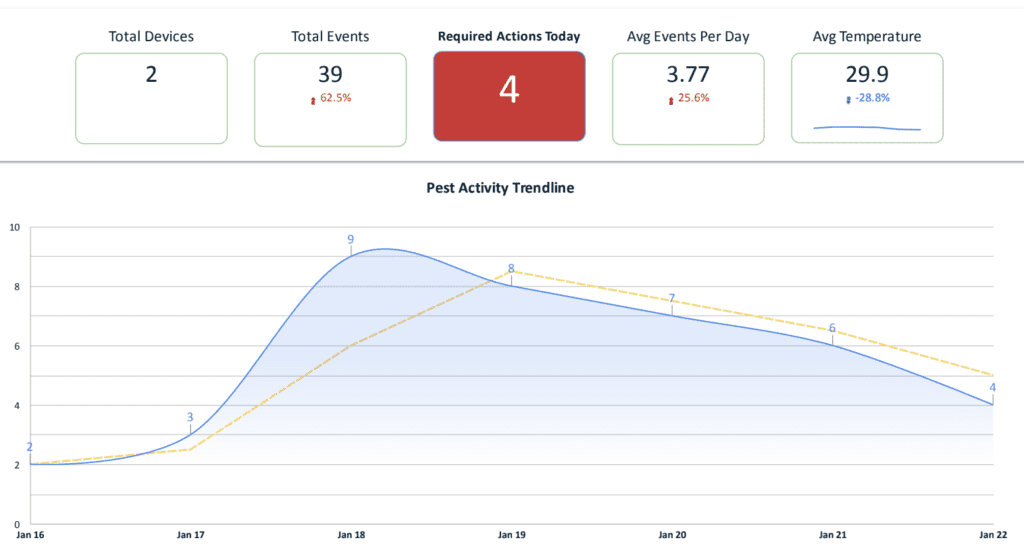
What we found. Where we found it. What we think is causing it. What we did about it. What we expect to happen. What you should watch for.
You get reports that actually tell you something, not just “serviced property, applied treatment.”
We verify results:
Sensors confirm rodent activity dropped. Follow-up inspections confirm treatments worked. Thermal scans confirm entry points are sealed. We don’t just trust that it worked. We check.
How This Applies to Different Pests
Pest | Traditional Approach | Our Approach |
|---|---|---|
Mice | Monthly trap checks, bait stations | Sensors track activity, treat when data confirms pressure, seal entry points, verify with sensors |
Termites | Annual inspection, hope you catch it | Soil temperature monitoring for swarm timing, thermal imaging for hidden damage, moisture analysis |
Carpenter Ants | Spray visible ants | Thermal imaging to find colony, moisture investigation to find cause, targeted treatment at source |
Mosquitoes | Monthly spray on schedule | Weather-timed applications, property mapping to protect gardens/wells, targeting rest areas |
Wasps | Remove nest when you call | Remove nest, investigate why they chose that spot, prevent re-nesting |
The common thread: understand the problem before treating it, use the right tool for the situation, verify it worked.
What You Get
Before treatment:
- Clear explanation of what’s happening and why
- Property assessment using thermal imaging and/or sensors as appropriate
- Treatment plan that makes sense for your specific situation
- Honest conversation about what’s realistic
During treatment:
- Technician who explains what they’re doing and why
- Respect for your property, your garden, your well, your family, your pets
- Appropriate product selection for your situation
- Documentation of everything
After treatment:
- Verification that treatment worked (sensors, follow-up inspection, thermal confirmation)
- Clear report showing what was done and what to expect
- Recommendations for preventing recurrence
- Ongoing monitoring if appropriate for your situation
No mystery. No “just trust us.” You understand what’s happening on your property.
FAQ
Is this more expensive than regular pest control?
Sometimes yes, sometimes no. Sensor installation has upfront cost, but you’re not paying for unnecessary monthly visits when there’s no activity. Thermal imaging during inspection costs more than a clipboard walkthrough, but it finds problems that save you money later. Overall, solving problems permanently often costs less than treating symptoms forever.
Do you use this approach for every pest?
The thinking applies to everything. The specific tools vary. Sensors make sense for rodents. Thermal imaging makes sense for hidden infestations and entry points. Environmental timing matters for outdoor treatments. Product selection matters for sensitive environments. We match the approach to the situation.
What if I just have a simple ant problem?
Then we solve your simple ant problem. Not every situation needs sensors and thermal cameras. Sometimes it’s gel bait at the right spots and sealing where they’re getting in. The point isn’t to use every tool. It’s to use the right tools.
How is this different from IPM that other companies advertise?
Most companies that say “IPM” mean “we also offer some non-chemical options.” Our approach is built around understanding problems before treating them, using data to make decisions, and verifying results. That’s different from checking an IPM box on a website.
Do you serve commercial properties?
Yes. Commercial properties often benefit most from this approach because they need documentation for audits, can’t afford pest incidents, and have compliance requirements.
This Is How We Think
Intelligent Pest Management isn’t a product we sell. It’s how we approach every job.
Some customers want sensors and dashboards and thermal reports. Some customers just want the mice gone. Either way, the thinking is the same: understand the problem, use the right tools, verify results, prevent recurrence.
If that sounds like what you’re looking for, let’s talk.