

Carpenter Bees
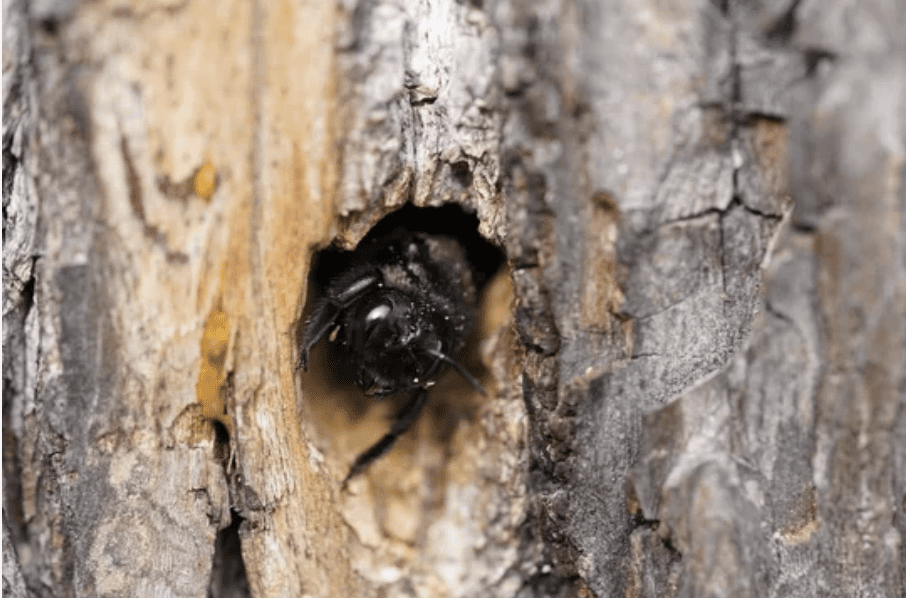
Carpenter bees have shiny, black abdomens without the fuzzy yellow hair that bumblebees carry. Males and females look slightly different, and each plays a unique role in their nesting behavior.
What Are Carpenter Bees?
Carpenter bees (Xylocopa virginica) look a lot like bumblebees but behave very differently. Instead of nesting in the ground, they tunnel into wood. In Massachusetts, where older homes and buildings are common, they often target decks, fences, siding, and even structural beams. Unlike termites, they don’t eat the wood. They bore into it to make nesting galleries, which weakens structures over time.
Male Carpenter Bees
- Slightly smaller than females.
- Distinct white or yellow patch on the face, making them easy to identify.
- Lack a stinger, so they can’t sting.
- Territorial and aggressive in behavior, often hovering near people or other insects to protect their chosen area.
Female Carpenter Bees
- Slightly larger and more robust than males.
- All-black face without a pale patch.
- Equipped with a stinger but rarely sting unless directly handled or threatened.
- Responsible for drilling the entry holes and creating tunnels where eggs are laid.
Why Carpenter Bees Are a Problem in Massachusetts
You notice round holes, about the size of a dime, in railings, trim, or siding. That’s a carpenter bee entry point. Inside, tunnels stretch several inches, sometimes branching. Each season, bees reuse and expand old galleries, making the damage worse year after year.
In Central Massachusetts, with its abundance of older housing stock, carpenter bees pose a bigger risk. Softwoods used in trim and untreated exterior wood are prime targets. For schools, daycares, restaurants, and offices, the sight of buzzing bees near entryways also creates safety concerns for children, staff, and customers.
Identifying Carpenter Bees vs. Other Wood-Destroying Insects
Carpenter Bees
- Large, ½–1 inch long.
- Shiny, hairless black abdomen.
- Perfectly round entry holes in wood.
- Sawdust-like material (frass) beneath openings.
Carpenter Ants
- Smaller, usually black.
- Excavations inside wood, but no perfectly round surface holes.
- Often found in damp, decaying wood.
Termites
- Small, white-to-tan bodies.
- Eat wood from the inside out.
- Mud tubes or hollow-sounding wood instead of clean entry holes.
Knowing the difference matters. Treatments for ants, termites, and carpenter bees are very different.
Seasonal Behavior of Carpenter Bees
Carpenter bees become active in Massachusetts in spring, usually around April when temperatures rise. Males hover outside, guarding entry holes while females tunnel and lay eggs. Activity peaks in late spring and early summer. By fall, new adults emerge, feed on pollen, and then overwinter inside the tunnels until the cycle begins again the next spring.
This seasonal cycle means damage compounds if nests are not treated before the next generation emerges.
Prevention Tips for Homeowners and Property Managers
Carpenter bee prevention is about making wood less attractive and blocking access.
- Paint or Seal Exposed Wood: Bees prefer untreated, unpainted softwood like pine. Painted and sealed surfaces are less inviting.
- Repair Holes Quickly: Filling existing tunnels with wood putty and repainting prevents reuse.
- Use Hardwood or Composite Materials: For railings, decks, and trim, hardwoods or non-wood materials resist damage better.
- Regular Inspections: Spring inspections catch activity early, before tunneling expands.
Professional Carpenter Bee Treatments
DIY fixes often fail because tunnels extend deep inside the wood. Professional treatment ensures complete protection.
- Inspection: We inspect your property to identify entry points and nesting sites.
- Targeted Applications: Low-toxicity dusts or foams are placed directly into the tunnels where bees nest. This is more precise and safer than spraying broad areas.
- Sealing & Repair: After treatment, holes are sealed to prevent reinfestation.
- Ongoing Protection: Our subscription-based PESTalytix Protection Plan provides seasonal visits, monitoring, and preventative care tailored to Massachusetts homes and businesses.
Insecticides Commonly Used in Carpenter Bee Control
Professionals use targeted insecticides inside the tunnels where female bees lay eggs. Common active ingredients include:
- Boron-based dusts (such as boric acid powders) – break down inside the tunnels and stop larvae development.
- Pyrethroid dusts (such as deltamethrin, cyfluthrin, or bifenthrin) – fast-acting and widely used for long-term control inside galleries.
- Carbaryl dust – effective but used less often today due to environmental concerns.
- Foam formulations of pyrethroids – expand inside tunnels to reach deep nesting chambers.
These products are applied directly into the entry holes. Once bees contact the treated surfaces, the colony declines. After treatment, sealing holes is essential to prevent reuse.
Related Wood-Destroying Pests in Massachusetts
Carpenter bees are one part of a larger threat group. Other wood-destroying insects include:
- Carpenter Ants – Common in damp, decayed wood.
- Termites – Silent destroyers that eat wood from the inside out.
- Powderpost Beetles – Create fine sawdust and pinhole openings.
PESTalytix’s Knowledge Center includes full guides on each, so you understand the risks and options for protecting your property.
FAQ: Carpenter Bees in Massachusetts
1. Do carpenter bees sting?
Males cannot sting at all. Females have stingers but rarely use them unless handled or threatened.
2. How do I tell the difference between carpenter bees and bumblebees?
Carpenter bees have shiny, hairless black abdomens. Bumblebees have fuzzy, yellow-and-black striped bodies.
3. Will carpenter bees damage my house?
Yes. They don’t eat wood, but their tunneling weakens trim, siding, decks, and sometimes structural beams if galleries expand over several years.
4. What attracts carpenter bees to my property?
Untreated, unpainted softwoods like pine are their preferred nesting spots. Exposed eaves, decks, and railings are common targets.
5. Can I treat carpenter bees myself?
DIY sprays rarely reach the depth of tunnels. Professional dust or foam treatments are more effective and include sealing and prevention.
6. Are carpenter bees important pollinators?
Yes. They visit flowers and help pollinate plants, but nesting in homes and buildings makes them a structural concern.
7. When are carpenter bees most active in Massachusetts?
They appear in April, peak in late spring and summer, and new adults emerge in fall before overwintering in tunnels.
8. Do carpenter bees come back to the same spot each year?
Yes. They often reuse and expand old tunnels, making untreated infestations worse over time.
9. What’s the best way to prevent carpenter bee damage?
Painting or sealing exposed wood, repairing holes quickly, and scheduling inspections before spring activity begins.
10. What happens if I ignore carpenter bees?
Damage compounds yearly, wood weakens, and repairs become costly. Galleries may also attract woodpeckers searching for larvae.
External Resources for More Scientific Information
For readers who want to explore carpenter bee biology, behavior, and control in greater scientific detail:
- University of Massachusetts Extension – Insects and Pests
- Penn State Extension – Carpenter Bees
- USDA Agricultural Research Service – Bee Research
- Entomological Society of America
These sources provide research-based guidance and current data on carpenter bee management and their ecological role.
Take Control of Your Property Health
Carpenter bee damage doesn’t go away on its own. Left untreated, holes multiply, wood weakens, and repairs get expensive. With proactive inspections and protection plans, you keep control of your home, your business, and your peace of mind.