

Finding ticks on your children or pets after yard time? You’re not alone-tick encounters spike every April through November in Worcester County. Deer ticks (Ixodes scapularis) carry Lyme disease, anaplasmosis, and babesiosis. In Massachusetts, 30-50% of adult deer ticks test positive for Lyme.
Here’s what most people don’t realize: ticks don’t live in your lawn. They wait in the 10-foot transition zone between your grass and the woods-and 80% of your yard’s ticks are concentrated there. From Sterling’s Rowley Hill Road conservation borders to Holden’s Jefferson Heights wooded lots, tick pressure increases yearly. PESTalytix creates barrier zones targeting where ticks actually live.
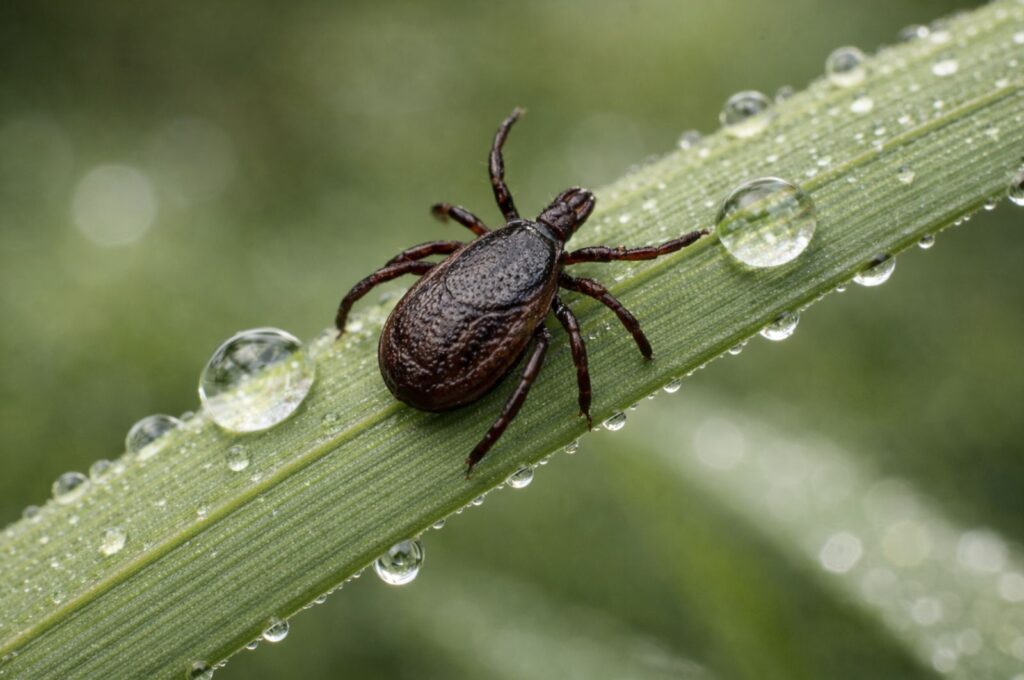
You find a tiny black speck attached to your child’s leg after an afternoon outside. You discover an engorged tick on your dog’s ear. You notice bites appearing after gardening near the tree line. These experiences mean ticks are active in your yard.
Quick Reference: Worcester County Tick Facts
| What You Need to Know | The Data |
|---|---|
| Primary threat | Deer tick (Ixodes scapularis) |
| Active season | April–November (peaks May-June, Sept-Oct) |
| Lyme infection rate | 30-50% of adult deer ticks in MA |
| Where they live | 10-foot ecotone zone, not open lawn |
| How they spread | Mice and deer carry them onto your property |
| Protection duration | Professional treatment: 4-6 weeks per application |
Understanding tick behavior changes everything. Ticks don’t jump or fly. They climb to knee-height vegetation and wait with outstretched legs. Knowing where they live helps you protect your family.
How Do I Know If I Have Ticks in My Yard?
Ticks leave no visible signs like droppings or nests. The only evidence is finding ticks on people, pets, or through active sampling. Here’s what to look for.
You’ll Find Ticks:
- On family members after outdoor activities, especially behind ears, armpits, groin
- On pets, particularly around ears, between toes, and under collars
- After walking through tall grass, leaf litter, or brushy edges
- More frequently in spring (May-June) and fall (October-November)
High-Risk Locations in Your Yard:
- The “ecotone” where mowed lawn meets woods or brush
- Stone walls with adjacent leaf litter (common along Sterling’s Legate Hill Road)
- Shaded garden beds near wooded areas
- Overgrown edges along fences
- Areas where deer frequently pass (especially Holden’s Malden Street corridor)
Tick Identification:
| Tick Type | Size (Unfed) | Color | Primary Concern |
|---|---|---|---|
| Deer tick (Ixodes scapularis) | Poppy seed (nymph), sesame seed (adult) | Black legs, orange-red body | Lyme disease, anaplasmosis, babesiosis |
| American dog tick (Dermacentor variabilis) | Larger (⅛ inch) | Brown with white markings | Rocky Mountain spotted fever (rare in MA) |
| Lone star tick (Amblyomma americanum) | Medium | Brown, white dot on female | Expanding range, alpha-gal syndrome |
Severity Assessment: When to Act
| What You’re Experiencing | What It Means | Timeline | Action Needed |
|---|---|---|---|
| One tick found after hiking | Normal woodland exposure | Seasonal | Monitor, check for more |
| Ticks found weekly on pets | Active tick population at yard edge | Ongoing | Schedule yard assessment |
| Multiple ticks on family members | High-pressure yard | Established | Call today |
| Lyme disease diagnosis in family | Confirmed tick exposure | Urgent | Call today. Reduce future risk |
Why Does Worcester County Have So Many Ticks?
Worcester County’s landscape creates ideal tick habitat. Understanding why helps you assess your property’s risk level.
Oak-Hickory Forests Fuel Tick Populations:
Forests in Sterling, Princeton, Holden, Rutland, and Paxton produce heavy acorn crops. Acorns feed white-footed mice (Peromyscus leucopus), the primary host for deer tick nymphs. When mouse populations boom, tick populations follow within 1-2 years. Mice are the critical link in the tick lifecycle.
Conservation Land Creates Wildlife Corridors:
Properties bordering Wachusett State Forest, Leominster State Forest, or DCR conservation land face elevated pressure. Neighborhoods like Princeton’s Wachusett Mountain area, Sterling’s West Waushacum Pond community, and Holden’s Trout Brook Conservation zone see constant wildlife traffic. Protected habitat supports deer, mice, and chipmunks that carry ticks onto your property.
Deer Travel Through Residential Yards:
White-tailed deer carry adult ticks and deposit them along travel routes. Properties near wooded corridors, stone walls, and wetland edges see more deer activity and more ticks.
Environmental Pressure Factors
| Factor | Why It Amplifies Tick Pressure | High-Risk Areas |
|---|---|---|
| Oak-hickory forests | Acorns feed mice, mice feed ticks | Sterling’s Chocksett Road corridor, Princeton’s Redemption Rock Trail, Holden’s Wachusett Street hills |
| Conservation land borders | Protected wildlife = tick hosts | Properties on Paxton’s Richards Avenue near Moore State Park, Rutland’s Muschopauge Road |
| Stone walls with leaf litter | Mouse highways, tick habitat | Lancaster’s Bolton Road historic properties, Sterling’s Pratts Junction area, Harvard’s Still River Road |
| Deer travel corridors | Adult ticks deposited along paths | West Boylston’s Oakdale neighborhood, Shrewsbury’s Lake Street corridor |
| Unmaintained yard edges | Tick questing habitat | Any property with brushy borders, common in Hubbardston’s Gardner Road area |
Where Are Ticks Living in My Yard?
Ticks don’t roam across your lawn looking for hosts. They wait in specific locations. Understanding tick behavior helps you focus protection efforts.
The Ecotone: Where Ticks Actually Live
The “ecotone” is the transition zone between your mowed lawn and wooded areas. This 10-foot band contains 80% of the ticks in your yard. Ticks quest from leaf litter and tall grass, waiting for hosts to pass.
Prime Tick Habitat in Residential Yards:
| Location | Why Ticks Choose It | Risk Level |
|---|---|---|
| Lawn-to-woods edge | Shade, moisture, leaf litter, host traffic | Highest |
| Stone walls | Mouse habitat, protected microclimate | High |
| Foundation plantings near woods | Shade, moisture, host access | High |
| Woodpiles | Mouse nesting, protected | Moderate |
| Swing sets near tree line | Children spend time in tick zone | Moderate |
| Open lawn center | Too sunny, too dry | Lowest |
Property Layout Risk Assessment
| Property Type | Tick Pressure | Why |
|---|---|---|
| Wooded lot with minimal lawn | Very High | Ticks throughout property |
| Lawn with wooded edges | High | Pressure at all borders |
| Lawn with neighbors on all sides | Moderate | Limited wildlife interface |
| Urban property, no trees | Low | Minimal tick habitat |
Tick Risk by Housing Era
| Housing Era | Why Ticks Reach Residents | High-Risk Features |
|---|---|---|
| Pre-1950 homes | Original landscaping extends to foundation, stone walls abut structure | Mature rhododendrons along Meetinghouse Hill Road in Sterling, ivy groundcover, fieldstone walls as tick highways |
| 1950-1980 colonials | Wooded lots with minimal clearing, decks near tree line | Shade gardens under decks in Holden’s Briarcliff Lane area, unmaintained perimeter beds |
| 1990s+ developments | Conservation land buffers required, homes back to protected forest | Properties on Princeton’s Mountain Road backing to Wachusett State Forest |
Why Doesn’t DIY Tick Control Work?
Most homeowners try basic yard maintenance before calling a professional. Here’s why these efforts often fail.
Mowing Alone Doesn’t Eliminate Ticks:
Keeping grass short helps. But ticks live in the transition zone, not your lawn. They survive in leaf litter, ground cover, and brush that mowing doesn’t reach.
Consumer Sprays Miss the Target:
Store-bought sprays are designed for small areas. Effective tick control requires treating the entire ecotone around your property. Partial treatment pushes ticks to untreated zones.
One Treatment Isn’t Enough:
Ticks have a two-year life cycle. Adults lay eggs in spring. Larvae emerge mid-summer. Nymphs become active the following spring. Single treatments miss life cycle stages.
DIY Cost Reality
| Attempt | What You Buy | Cost | Time Spent | Result |
|---|---|---|---|---|
| #1: Granular yard treatment | Big-box store granules | $30-60 | 3-4 hours | Treats lawn (not where ticks live) |
| #2: Spray concentrate | Concentrated spray | $25-50 | 4-6 hours | Partial coverage, misses edges |
| #3: Tick tubes | Mouse-targeted tubes | $30-80 | 2-3 hours | Helps with mice, doesn’t kill ticks directly |
| Total Before Calling Pro | – | $85-190 | 9-13 hours | Ticks still found on family |
What Happens During Professional Tick Control?
We target ticks where they actually live. Our approach addresses the entire property, not just visible areas.
| Phase | Duration | What Happens | You Receive |
|---|---|---|---|
| 1. Property Assessment | Day 1 (45-60 min) | Map tick habitat zones, identify high-risk areas, assess wildlife pressure | Property map with risk zones identified |
| 2. Treatment Plan | Day 1-2 | Develop barrier treatment strategy based on property layout | Written plan with treatment schedule |
| 3. Customer Approval | Flexible | Review plan, you approve treatment scope | Clear understanding of coverage and timing |
| 4. Barrier Treatment | Scheduled | Apply treatment to ecotone (10-foot perimeter), woodland edges, stone walls | Service documentation, re-entry timeline |
| 5. Seasonal Follow-Up | Every 4-6 weeks | Re-treat during peak season (May-June, September-October) | Status updates, activity monitoring |
Our Approach: Barrier Zone Treatment
Effective tick control targets the ecotone, not your entire lawn:
- 10-foot barrier treatment: We treat the transition zone where ticks actually wait for hosts
- Stone wall treatment: Addresses mouse habitat and tick questing areas
- Woodland edge application: Creates protection at property borders
- Drag cloth sampling: We measure tick activity before and after treatment
For properties near Wachusett Reservoir or DCR conservation land, we use approved materials that meet all buffer zone requirements.
Want to know your property’s tick risk level?
Schedule your free assessment and get a detailed property map.
What Affects Your Tick Control Cost in Worcester County?
Several factors influence tick treatment pricing. Understanding these helps you evaluate options.
| Property Type | Cost Factors | Why It Matters |
|---|---|---|
| Large wooded lot | More linear footage of ecotone | Extended barrier treatment required |
| Conservation land border | Higher wildlife pressure | More frequent treatments may be needed |
| Multiple stone walls | Additional tick habitat | Walls require targeted treatment |
| Simple lot layout | Defined edges, clear zones | Typically straightforward treatment |
What’s included:
- Property assessment and risk mapping
- Barrier treatment of ecotone zones
- Seasonal re-treatment during peak activity
- Activity monitoring with drag cloth sampling
Learn more about our seasonal protection programs: Tick and Mosquito Control Services
What Makes Worcester County Properties Different?
Family and Pet Safety
Protecting your family during treatment:
Treatment Safety:
- Most applications dry within 2-4 hours
- Re-entry timeline provided for each treatment
- Pet-friendly options available
- Children and pets stay off treated areas until dry
Disease Prevention:
Reducing tick encounters reduces disease risk. Professional barrier treatment significantly decreases the number of ticks reaching your family. Pets also carry fleas alongside ticks-both are addressed with comprehensive yard treatment.
Regulatory Compliance
Depending on your property location, different requirements may apply:
| Regulation | When It Applies | What It Means for Treatment |
|---|---|---|
| DCR Watershed Protection | Properties near Wachusett Reservoir | DCR-approved materials only, buffer distances observed |
| MA Wetlands Protection Act | Within 100 feet of wetlands | Reduced-risk materials, strict buffer zones |
| Private Well Setbacks | Properties with wells | 100-foot buffer from wellhead, well-water safe products only |
| Conservation Land Buffers | Bordering state forests | Documentation provided, ongoing seasonal management required |
Ongoing Property Management
Properties near conservation land face continuous pressure from protected wildlife populations. Seasonal treatment plans maintain protection throughout active months. We provide documentation for your records with every treatment.
Frequently Asked Questions
How do I get rid of ticks in my yard?
Professional barrier treatment targets the ecotone where ticks live. This 10-foot zone between lawn and woods contains most ticks. DIY treatments often miss this critical area. Seasonal applications during spring and fall maintain protection.
Do I need to treat my whole yard for ticks?
No. Ticks don’t live in sunny, mowed lawn areas. Treatment focuses on the transition zone between lawn and woods, stone walls, and shaded edges. This targeted approach is more effective than whole-yard treatment.
How long does tick treatment last?
Each treatment provides 4-6 weeks of protection. Seasonal programs include re-treatment during peak tick activity in late spring and early fall. Continuous protection requires ongoing treatment.
Is tick treatment safe for pets?
Yes. We use pet-friendly options and provide specific re-entry timelines. Most treatments dry within 2-4 hours. Pets can return to treated areas after complete drying.
What is the best way to prevent ticks?
Combine professional barrier treatment with habitat modification. Keep grass mowed short. Create a 3-foot mulch or stone barrier between lawn and woods. Remove leaf litter from yard edges. These steps reduce tick habitat on your property.
When is tick season in Massachusetts?
Tick activity runs from April through November in Massachusetts. Peak seasons are late spring (May-June) when nymphs emerge and fall (September-October) when adults seek hosts. Nymphs cause most Lyme disease cases because they’re tiny and often missed.
Ready to Protect Your Family This Season?
Ticks carry serious diseases. Every year you wait means more exposure risk for your family. Worcester County’s wildlife and forests create ongoing pressure that doesn’t decrease on its own.
What happens during your free assessment:
- Property walk-through to identify tick habitat zones
- Risk mapping showing high, moderate, and low exposure areas
- Wildlife pressure assessment based on property location
- Treatment options with clear pricing
- No obligation to proceed
Schedule your free assessment today and find out exactly where ticks are living in your yard.