
Seeing large black ants marching across your kitchen counter? You’re not imagining things-and this isn’t a problem that goes away on its own. You may be dealing with carpenter ants (Camponotus pennsylvanicus), the most destructive ant species in Massachusetts. These wood-destroying insects target Worcester County homes from April through October, nesting in moisture-damaged wood. If you’re seeing ant activity, you’re not alone-carpenter ants are among the most common pest concerns for Worcester pest control customers.
Here’s what you’re facing: sawdust piles under window sills or door frames mean carpenter ants are excavating galleries inside your structural wood. Left unchecked, carpenter ant damage costs homeowners $500-$3,000+ in repairs-and the damage grows every week they remain. From Sterling’s lakefront properties to Worcester’s Victorian homes, this is a problem that demands attention. PESTalytix inspects your property, locates the nest, and creates a treatment plan for your specific situation.
Schedule your free inspection today.
You spot large black ants near your dishwasher after running a cycle. You find fine wood shavings on your basement floor. You see ant trails appearing within 48 hours after a heavy rainstorm. These signs mean ants have found something worth staying for.
Not all ants damage wood. Pavement ants and odorous house ants invade kitchens for food but leave structures alone. Carpenter ants excavate wood to create nesting galleries-similar to how termites damage wood, though through different mechanisms. Knowing which ant you have determines the urgency.
Worcester County Ant Facts
| Fact | Detail |
|---|---|
| Primary Threat | Carpenter ant (Camponotus pennsylvanicus) |
| Active Season | April through October; peak May-June |
| Damage Type | Excavates galleries in moisture-damaged wood |
| Repair Costs | $500-$3,000+ for structural damage if untreated |
| Colony Size | 2,000-3,000 workers with satellite nests |
| DIY Success Rate | Low-sprays kill workers but never reach the queen |
| Treatment Timeline | 2-4 weeks for complete elimination |
How Do I Know What Kind of Ants I Have?
Worcester County homes deal with three common ant species. Each requires different treatment approaches. Size, behavior, and location help you identify which ants have invaded.
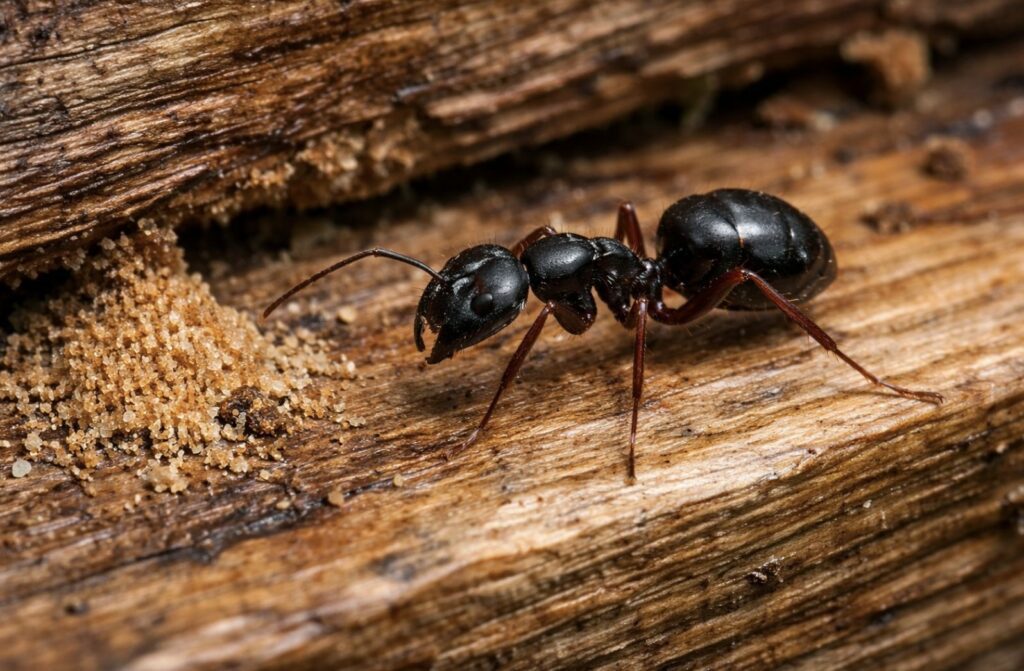
Carpenter Ants (Camponotus pennsylvanicus):
- Large black ants (¼ to ½ inch long)
- Found near moisture: dishwashers, bathrooms, basement rim joists
- Active at night, often first spotted in kitchens between 10 PM and 2 AM
- Leave behind frass (sawdust-like wood shavings mixed with insect parts)
Pavement Ants (Tetramorium caespitum):
- Small dark brown to black ants (⅛ inch long)
- Enter through cracks in foundation and slabs
- Form visible trails to food sources
- Common in kitchens and along baseboards
Odorous House Ants (Tapinoma sessile):
- Tiny brown ants (1/16 to ⅛ inch long)
- Emit coconut or rotten-butter smell when crushed
- Trail along counters and cabinets
- Attracted to sweets and moisture
Quick Identification Table
| Feature | Carpenter Ants | Pavement Ants | Odorous House Ants |
|---|---|---|---|
| Size | ¼ to ½ inch | ⅛ inch | 1/16 to ⅛ inch |
| Color | Black or black/red | Dark brown/black | Brown |
| Crush smell | None | None | Coconut/rotten smell |
| Damage risk | High (excavates wood) | None | None |
| Entry location | Moisture areas, roof lines | Foundation cracks | Windows, doors |
Severity Assessment: When to Act
| What You’re Experiencing | What It Means | Timeline | Action Needed |
|---|---|---|---|
| Occasional ant in kitchen | Scouts looking for food | Recent | Clean food sources, monitor |
| Ant trail to food source | Colony nearby, foraging established | 1-2 weeks | Identify species, remove attractants |
| Large black ants near water fixtures | Carpenter ants, possible nest in structure | Active infestation | Schedule inspection |
| Sawdust piles under wood | Carpenter ants excavating | Structural damage occurring | Call today |
Why Do Ants Target Worcester County Homes?
Worcester County’s geography and housing stock create ideal conditions for ant infestations. Understanding why helps you prevent problems before they start.
Moisture Drives Carpenter Ants:
Carpenter ants target water-damaged wood. Properties near Wachusett Reservoir, Lake Quinsigamond, Waushacum Ponds, and the Nashua River face constant pressure. High humidity softens structural wood. Deck posts, porch beams, and window sills near water sources become prime nesting sites.
Pre-1950 Homes Have Hidden Damage:
Victorian homes in Worcester, Clinton, and Fitchburg often have unknown water damage in walls and rooflines. Ice dams, old plumbing leaks, and condensation create moisture pockets carpenter ants exploit. Balloon framing allows ants to travel between floors without detection.
Trees Touching Structures Create Bridges:
Oak and hickory forests in Princeton, Sterling, Holden, and Rutland produce carpenter ant colonies in dead stumps and logs. When tree branches touch your roof or siding, ants walk directly into your attic. This bridge bypasses foundation-level treatments entirely.
Environmental Pressure Factors
| Factor | Why It Amplifies Ant Pressure | High-Risk Areas |
|---|---|---|
| Lakefront properties | Constant humidity, damp wood | Lakeshore Drive and Meetinghouse Hill Road in Sterling; Beaman Street in West Boylston; Manning Street in Holden |
| Overhanging tree branches | Direct bridges from outdoor nests to roof | Goodnow Road and Mountain Road in Princeton; Barre Paxton Road in Rutland; Pleasant Street in Paxton |
| Ice dam history | Hidden moisture damage in walls | Salisbury Street and June Street in Worcester; Water Street in Fitchburg; Merriam Avenue in Leominster |
| Low deck clearance | Trapped moisture, no airflow | Shrewsbury Street and Reservoir Street in Holden; Main Street in Shrewsbury; Lincoln Street in Hudson |
| Old plumbing or condensation | Wall cavity moisture | Crown Street and Chatham Street in Worcester; High Street in Clinton; Main Street in Lancaster |
How Are Ants Getting Into My House?
Ants need only the smallest gaps to enter. Understanding entry points by housing type helps you know where to look.
Top 5 Carpenter Ant Entry Points:
1. Tree-to-Roof Contact
- Gap size: Any contact point
- Why they exist: Trees grow, homeowners don’t notice
- Where to look: Branches touching roof, gutters, or siding
- Common in: Wooded lots in Sterling, Princeton, Holden
2. Roof and Fascia Damage
- Gap size: Any crack or soft spot
- Why they exist: Ice dams, clogged gutters, old roofing
- Where to look: Fascia boards, soffit corners, roof edges
- Common in: Victorian homes in Worcester, Clinton
3. Deck and Porch Connections
- Gap size: Ledger board junctions
- Why they exist: Water traps where deck meets house
- Where to look: Where deck framing attaches to house
- Common in: 1980s-2000s homes with attached decks
4. Utility Penetrations
- Gap size: ¼ inch or larger
- Why they exist: Gaps around HVAC lines, cables, pipes
- Where to look: Exterior walls where utilities enter
- Common in: All housing types
5. Foundation-to-Sill Junction
- Gap size: Shrinkage gaps
- Why they exist: Wood shrinks over decades
- Where to look: Where wood frame meets foundation
- Common in: Pre-1980 homes countywide
Housing Type Vulnerabilities
| Housing Era/Type | % of Customers | Common Entry Locations | Why It Fails | What You’ll Find |
|---|---|---|---|---|
| 2000s+ Construction (Shrewsbury subdivisions, Holden developments off Reservoir Street) | 40% | HVAC penetrations, garage ceiling, vinyl corner posts | Gaps left around utilities; settling opens seams | Ants trailing along HVAC lines to upper floors |
| 1980s-1990s Colonials (Sterling center, West Boylston, Hudson neighborhoods) | 30% | Deck ledger boards, bathroom vents, addition seams | Moisture traps at deck; original caulking failed | Frass in basement; ant trails in bathrooms |
| 1950s-1970s Ranches (Leominster, Fitchburg post-war neighborhoods) | 20% | Sill plate shrinkage, window AC units, crawlspace | Wood shrinkage; crawlspaces retain moisture | Ants emerging from wall outlets, damp crawlspace |
| Pre-1950 Victorians (Worcester’s Crown Hill, Clinton center, Lancaster) | 10% | Ice dam damage, porch posts, balloon framing | Hidden rot; open wall cavities | Sawdust from ceiling, ants in multiple rooms |
Why Isn’t DIY Ant Control Working?
Most Worcester County homeowners try sprays before calling a professional. Here’s why surface treatments don’t solve ant problems.
Sprays Kill Workers, Not the Queen:
Store-bought ant spray kills ants on contact. It never reaches the queen. She continues producing eggs. New workers replace dead ones within days. You’re treating symptoms, not the source.
Baits Work Slowly or Not at All:
Consumer baits may work for small colonies of pavement ants. Carpenter ant colonies contain thousands of workers spread across satellite nests. Baits often don’t reach all nests. Colonies with multiple queens survive partial treatment.
You Can’t See Where They’re Nesting:
Carpenter ants nest inside walls, roof structures, and insulation. Professional inspection locates hidden nests using behavior patterns and structural knowledge. DIY treatment guesses at nest locations.
DIY Cost Reality
| Attempt | What You Buy | Cost | Time Spent | Result |
|---|---|---|---|---|
| #1: Spray | Contact kill spray | $10-25 | 2-3 hours | Dead ants on counter, more appear in 3 days |
| #2: Baits | Bait stations, gel bait | $20-40 | 4-6 hours placing | Some reduction, trails reappear in 2 weeks |
| #3: “Pro Strength” | Online products, perimeter spray | $40-80 | 5-8 hours | Ants move to different entry point |
| Total Before Calling Pro | – | $70-145 | 11-17 hours | Problem not solved, damage continues |
What Happens During Professional Ant Control?
We follow a systematic process. Nothing happens without your approval first.
| Phase | Duration | What Happens | You Receive |
|---|---|---|---|
| 1. Inspection | Day 1 (1-2 hrs) | Identify ant species, locate nests, document moisture sources | Findings report with photos, species ID, nest locations |
| 2. Planning | Day 1-2 | Develop treatment plan based on species and nest locations | Written plan with pricing for each component |
| 3. Customer Approval | Flexible | Review findings together, you approve treatment scope | Clear understanding of what’s included |
| 4. Treatment | Scheduled | Species-appropriate treatment targeting nest locations | Service documentation, re-entry timeline |
| 5. Follow-Up | 2-4 weeks | Monitor activity, retreat if needed, address moisture | Status update, prevention recommendations |
Materials We Use
Effective ant control requires the right approach for each species:
- Carpenter ant baits: Slow-acting products workers carry back to nest and queen
- Non-repellent treatments: Ants cross without detecting, spreading product throughout colony
- Dust applications: For wall voids and hidden nest locations
- Perimeter barriers: Prevent new colonies from establishing
For homes near Wachusett Reservoir and DCR watershed areas, we use approved materials that meet all buffer zone requirements.
Regulatory Compliance
Depending on your property location, different regulations may apply:
| Regulation | When It Applies | What It Means for You |
|---|---|---|
| DCR Watershed Protection | Properties near Wachusett Reservoir (West Boylston, Holden, Sterling) | Reduced-risk materials required; we use DCR-compliant products |
| MA Wetlands Protection Act | Within 100 feet of wetlands, streams, or ponds | Buffer zone restrictions; targeted application methods |
| Private Well Considerations | Properties with private wells | Well-water safe products; no soil injection near wellhead |
Ready to find out where ants are nesting? Schedule your free inspection and get a detailed treatment plan.
What Affects Your Ant Control Cost in Worcester County?
Several factors influence pricing. Understanding these helps you know what to expect.
| Property Type | Cost Factors | Why It Matters |
|---|---|---|
| Pre-1950 Victorians | Multiple entry points, hidden nests in balloon framing | Complex treatment, more inspection time |
| Lakefront properties | Ongoing moisture, higher reinfestation risk | May need ongoing monitoring |
| Homes with attached decks | Water damage at ledger, satellite nests | Address moisture source for lasting results |
| Newer construction | Fewer hidden voids, easier access | Typically straightforward treatment |
What’s NOT included:
- We don’t repair wood damage (we recommend a carpenter for structural repairs)
- We don’t address moisture sources like plumbing leaks (we identify them for your plumber)
Learn more about our professional ant control services and what’s included in treatment.
Special Considerations for Worcester County Properties
Historic Properties and Structural Preservation
Pre-1950 homes in Worcester, Clinton, Sterling, and Lancaster require careful approaches:
Protecting Original Materials:
- Non-invasive inspection techniques
- Targeted treatment to nest locations, not blanket applications
- We document damage for your records and insurance
Moisture Management:
Carpenter ant problems often indicate hidden water damage. We identify moisture sources so you can address root causes.
Family and Pet Safety
Protecting your family during treatment is our priority:
Treatment Safety:
- Materials dry within 2-4 hours
- Re-entry timeline provided for each application
- Pet-friendly baiting options available
- Well-water safe products for properties with private wells
Frequently Asked Questions
How much does ant extermination cost?
$75-200 cost varies based on ant species, nest locations, and property complexity. Carpenter ant treatment costs more than pavement ant control because it requires locating and treating hidden nests. Your free inspection includes a detailed quote with no obligation.
What is the best way to get rid of ants?
Identify the species first. Pavement ants respond to bait stations. Carpenter ants require professional treatment targeting the nest. Surface sprays don’t solve either problem long-term.
Why do ants keep coming back?
Three common reasons: the queen wasn’t eliminated, satellite nests exist elsewhere, or the attractant (moisture or food source) remains. Professional treatment addresses all nest locations.
How do exterminators get rid of ants?
We identify the species, locate all nests, apply species-appropriate treatments, and monitor for complete elimination. For carpenter ants, we also identify moisture sources enabling the infestation.
Is ant treatment safe for pets?
Yes. We use pet-friendly baiting options and provide specific re-entry timelines. Gel baits go in areas pets can’t access. Perimeter treatments dry before pets return to the yard.
What is the difference between carpenter ants and regular ants?
Carpenter ants are larger (¼ to ½ inch), excavate wood for nesting, and cause structural damage. “Regular” ants like pavement ants and odorous house ants are smaller and only seek food. Carpenter ant infestations require professional treatment.
Stop Ant Damage Before It Gets Worse
Carpenter ants won’t leave on their own. Every day they remain, they excavate more galleries in your structural wood. Worcester County’s moisture conditions mean ant pressure continues year after year.
What happens during your free inspection:
- Species identification (carpenter ants vs. nuisance ants)
- Nest location using behavior patterns and structural knowledge
- Entry point documentation with photos
- Moisture source identification
- Treatment options with clear pricing
Schedule your free inspection today and find out exactly what you’re dealing with.
Learn more about our comprehensive ant control approach