

Finding pencil-width mud tubes running up your foundation wall? You’re not imagining things and this is exactly as serious as it looks. Subterranean termites (Reticulitermes flavipes) cause more structural damage in the United States than fires and storms combined, and they’re active in Worcester County year-round. Be sure to checkout our complete guide on Worcester pest control.
Here’s what you’re facing: termites work silently inside your walls for 3-5 years before most homeowners notice any signs. By the time you see swarmers or hollow wood, damage can exceed $3,000-$8,000+ in repairs. From Clinton’s riverside properties to Sterling’s historic farmhouses, termites target homes with moisture-prone foundations and soil-to-wood contact. PESTalytix provides professional termite inspections and treatment plans.
You see winged insects swarming near your basement windows on a warm spring day. You tap a baseboard and hear a hollow sound. You discover mud tubes on your foundation during yard work. These signs mean termites may already be feeding inside your structural wood.
Termites differ from carpenter ants in one critical way. Termites eat wood. Carpenter ants excavate it but eat protein. Both cause structural damage, but termite damage is often more extensive before detection.
Worcester County Termite Facts
| Fact | Detail |
|---|---|
| Species | Eastern subterranean termite (Reticulitermes flavipes) |
| Swarmer Season | Late April through May; first warm day after rain |
| Colony Maturity | 3-5 years before swarmers appear |
| Colony Size | 60,000-1,000,000+ workers per colony |
| Repair Costs | $3,000-$8,000+ average for detected infestations |
| Silent Period | Years of damage before visible signs |
| DIY Success Rate | Near zero-colony lives 4-18 feet underground |
| Treatment Timeline | Liquid barrier: immediate; Bait system: 6-12 months |
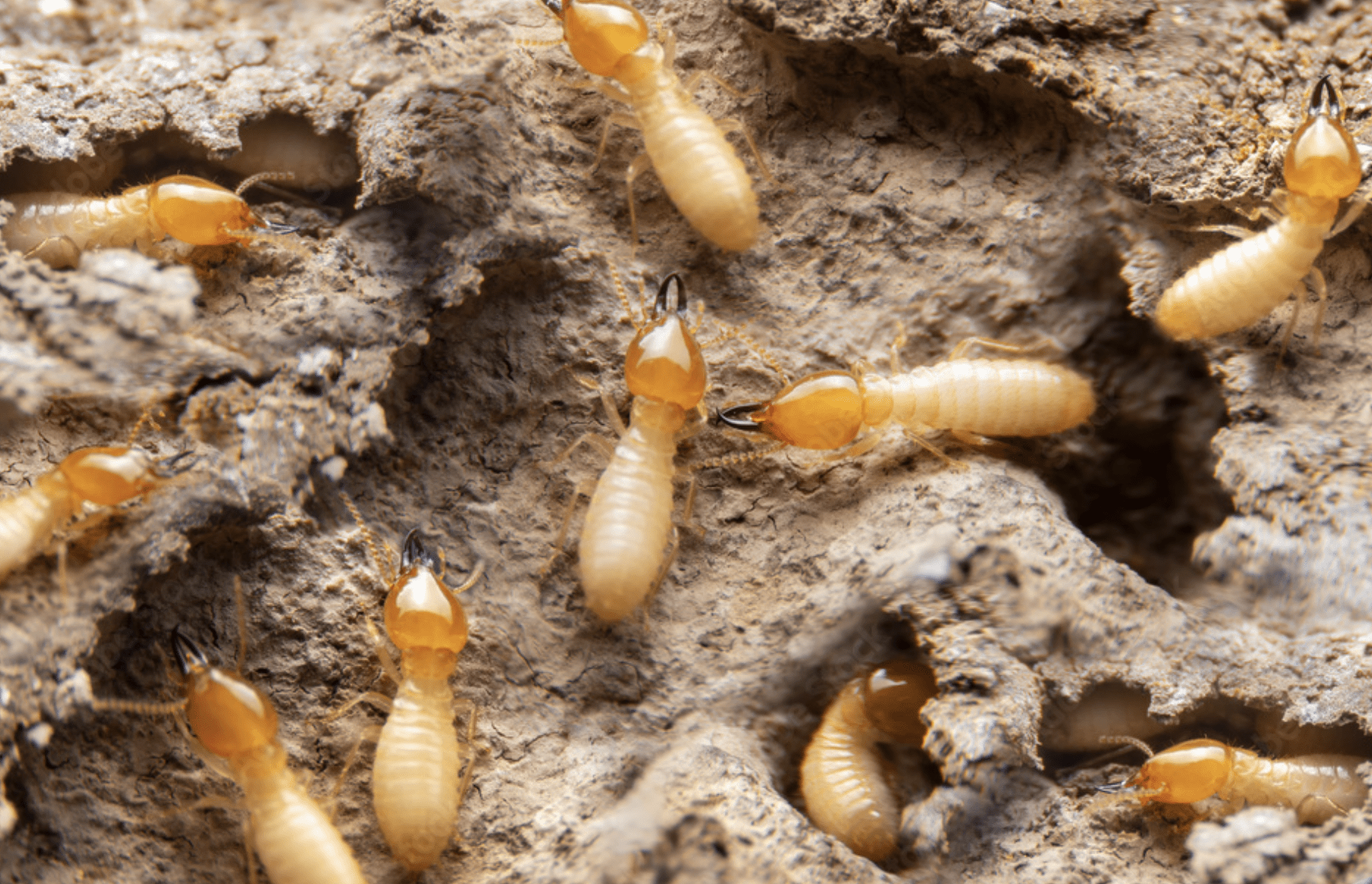
How Do I Know If I Have Termites?
Termites leave specific signs that differ from other wood-destroying insects. Look for these three types of evidence.
You’ll See:
- Mud tubes (pencil-width, vein-like tunnels) running vertically up concrete foundations
- Winged swarmers emerging inside near windows, doors, or light fixtures
- Piles of shed wings on windowsills or near foundation (after swarmer event)
- Wood damage that follows the grain pattern (not across it)
- Paint bubbling or sagging drywall (moisture from termite activity)
You’ll Feel/Hear:
- Hollow sound when tapping baseboards, door frames, or window sills
- Wood that crumbles when pressed with a screwdriver
- Soft spots in flooring, especially near exterior walls
Critical Timing:
- Swarmers appear on the first warm spring day after rain (typically late April through May)
- A swarmer event inside your home means the colony is mature (3-5 years old)
- Finding swarmers outside near your foundation still warrants inspection
How to Tell Termites from Carpenter Ants
| Feature | Termites | Carpenter Ants |
|---|---|---|
| Body shape | Straight waist, equal-length wings | Pinched waist, unequal wings |
| Antenna | Straight, beaded | Elbowed |
| Wood damage | Follows grain, smooth galleries | Across grain, rough galleries |
| Debris | Mud tubes, no frass piles | Sawdust-like frass piles |
| Swarmers | Creamy/black, wings longer than body | Black, wings equal to body |
When You Should Take Action
| What You’re Experiencing | What It Means | Timeline | Action Needed |
|---|---|---|---|
| Swarmers outside near foundation | Colony nearby, likely in soil | Established nearby | Schedule inspection within 2 weeks |
| Swarmers inside home | Mature colony in or under your structure | 3-5 year old colony | Call today |
| Mud tubes on foundation | Active termite foraging route | Active infestation | Call today |
| Hollow baseboards or sill | Structural damage occurring | Extended infestation | Call today. Document for insurance |
Why Do Termites Target Worcester County Homes?
Worcester County’s soil conditions and housing stock create ideal termite habitat. Understanding why helps you assess your risk.
Moist Soils Enables Colonies:
Subterranean termites require soil contact and moisture. Properties along the Nashua River, Quinapoxet River, and Wachusett Reservoir fringe have consistently damp soil. Sandy outwash soils along river terraces make easy excavation. High water tables in Lancaster, Clinton, and West Boylston low-lying areas keep soil moist year-round.
Old Foundations Create Access:
Pre-1950 homes often have direct wood-to-soil contact. Foundation walls with failing mortar, fieldstone with gaps, and sill plates without termite shields all provide entry. Victorian homes in Worcester, Fitchburg, and Clinton are at elevated risk.
Hidden Moisture Problems:
Basement dampness, poor grading, clogged gutters, and condensation create conditions termites exploit. They build mud tubes to reach moisture-damaged wood above the foundation. Once inside walls, they’re invisible until damage becomes severe.
Environmental Pressure Factors
| Factor | Why It Amplifies Termite Pressure | High-Risk Areas |
|---|---|---|
| Sandy river soils | Easy tunneling, colonies spread quickly | Water Street and High Street in Clinton; Main Street in Lancaster; River Street in Fitchburg |
| High water table | Consistent moisture termites need | Beaman Street in West Boylston; George Hill Road in Lancaster; Route 70 corridor |
| Reservoir fringe | Humidity, saturated soils | Lakeshore Drive in Sterling; Route 140 in Boylston; Reservoir Street in Clinton |
| Pre-1950 foundations | Wood-soil contact, no termite shield | Crown Street and Chatham Street in Worcester; High Street in Clinton; Water Street in Fitchburg |
| Basement moisture | Creates optimal conditions in structure | All homes with sump pumps or efflorescence |
How Are Termites Getting Into My Home?
Termites don’t need large gaps. They build mud tubes to bridge any obstacle. Understanding where they enter helps you know what to look for.
Top 5 Termite Entry Points:
1. Cracks in Poured Concrete Foundations
- Gap size: 1/32 inch or larger (nearly invisible)
- Why they exist: Settling, curing shrinkage
- Where to look: Along foundation walls, near floor drains, utility penetrations
- Common in: 1960s-1990s poured foundations
2. Hollow Block Foundation Voids
- Gap size: Full block cores provide hidden pathways
- Why they exist: Block walls have open cores termites travel through
- Where to look: Interior of block walls (not visible without inspection)
- Common in: 1950s-1980s construction
3. Bath Traps and Plumbing Penetrations
- Gap size: Gaps around pipes
- Why they exist: Plumbers drill oversize holes for pipe routing
- Where to look: Under first-floor bathrooms, where drains enter slab
- Common in: Slab-on-grade homes, additions over crawlspaces
4. Wood-Soil Contact
- Gap size: Direct contact (no gap needed)
- Why they exist: Building code violations, settling, debris against siding
- Where to look: Deck posts, porch supports, siding at grade
- Common in: Pre-1970 construction, attached wood structures
5. Foam Board Insulation Below Grade
- Gap size: Hidden behind foam
- Why they exist: Exterior foam creates hidden tunnel paths
- Where to look: Can’t see from outside (requires professional inspection)
- Common in: 1990s-2010s energy-efficient construction
Housing Type Vulnerabilities
| Housing Era/Type | % of Customers | Common Entry Locations | Why It Fails | What You’ll Find |
|---|---|---|---|---|
| 2000s+ Construction (Shrewsbury subdivisions, Holden developments) | 35% | Bath traps, HVAC penetrations, garage slab joints | Gaps at utility entry; foam board hides activity | Mud tubes in garage, swarmers near bath |
| 1980s-1990s Colonials (Sterling center, West Boylston, Hudson) | 25% | Addition seams, deck-to-house connections | Addition foundations less protected; deck posts at grade | Mud tubes at addition, damage at deck ledger |
| 1950s-1970s Ranches (Leominster, Fitchburg, Clinton post-war neighborhoods) | 25% | Hollow block cores, crawlspace wood contact | Block walls provide highways; crawlspaces often untreated | Tubes in crawlspace, damage at sill plate |
| Pre-1950 Fieldstone/Brick (Worcester’s Crown Hill, Clinton center, Lancaster) | 15% | No termite shield, mortar gaps, wood-soil contact | Sills often sit directly on stone; hidden moisture | Extensive sill damage, hidden tubes behind finish |
Why Aren’t DIY Termite Treatments Working?
Store-bought termite products target symptoms, not the colony. Here’s why DIY approaches fail consistently.
You Can’t Reach the Colony:
Termite colonies live 4-18 feet underground. Workers you see are foragers. Killing workers at the surface doesn’t affect the queen or colony reproduction.
Incomplete Barriers Fail:
A continuous chemical barrier requires specialized equipment and training. DIY spot treatments create gaps termites bypass within weeks.
Bait Systems Need Professional Monitoring:
Consumer-grade bait stations lack the monitoring frequency and product potency professional systems use. Termites ignore or avoid them.
Professional termite control eliminates entire colonies using liquid barriers, professional-grade bait systems, or combination approaches. Treatment success depends on complete coverage and professional application.
What Does Professional Termite Treatment Look Like?
Professional termite control uses two primary approaches: liquid barriers and bait monitoring systems. Here’s how each works.
Liquid Barrier Treatment
How It Works:
We create a continuous chemical barrier in the soil around and under your foundation. Termites contacting the treated zone die before reaching wood.
Application Process:
- Trench along exterior foundation (6 inches wide, to footing depth)
- Apply liquid termiticide to soil
- Drill and treat under slabs, porches, and attached structures
- Treat crawlspaces and accessible soil areas
- Backfill and restore landscaping
Timeline: Protection begins immediately. Treatment lasts 5+ years when properly applied.
Bait Monitoring System
How It Works:
We install monitoring stations around your property perimeter. When termites feed on bait, they carry toxicant back to the colony, eliminating it over time.
Installation Process:
- Install in-ground stations every 10-20 feet around structure
- Monitor monthly for termite activity
- When activity detected, activate with colony elimination bait
- Continue monitoring until colony elimination confirmed
- Maintain stations for ongoing protection
Timeline: Colony elimination takes 6-12 months after bait activation. Ongoing monitoring provides continuous protection.
Both approaches have applications. Your inspection determines which works best for your property’s construction and termite pressure level.
Regulatory Compliance
Depending on your property location, different regulations may apply:
| Regulation | When It Applies | What It Means for You |
|---|---|---|
| DCR Watershed Protection | Properties near Wachusett Reservoir (West Boylston, Holden, Sterling) | Reduced-risk materials required; we use DCR-compliant products |
| MA Wetlands Protection Act | Within 100 feet of wetlands, streams, or reservoirs | Buffer zone restrictions; targeted application methods |
| Private Well Considerations | Properties with private wells | Well-water safe products; buffer zones from wellhead strictly observed |
Concerned about termite activity? Schedule your free inspection and get a complete assessment.
What Affects Your Termite Control Cost in Worcester County?
Several factors influence termite treatment pricing. Understanding these helps you evaluate quotes.
| Property Type | Cost Factors | Why It Matters |
|---|---|---|
| Slab-on-grade construction | Drilling required for under-slab treatment | More labor intensive than perimeter-only |
| Large or complex footprint | Linear footage determines material quantity | Larger homes require more treatment |
| Finished basement | Limited access may require additional drilling | Access points affect treatment approach |
| Addition or attached structure | Each foundation section needs treatment | Multiple structures increase scope |
| Active infestation extent | More damage means more inspection and treatment | Severity affects total scope |
What’s NOT included in termite treatment:
- We don’t repair termite-damaged wood (we document and refer to a carpenter)
- We don’t address moisture problems (we identify sources for your treatment)
Special Considerations for Worcester County Properties
Historic Properties and WDO Inspections
Pre-1950 homes in Worcester, Clinton, Sterling, and Lancaster require special attention:
Documentation for Insurance:
- We document all damage locations with photos
- Findings report supports insurance claims when applicable
- WDO (Wood-Destroying Organism) inspection reports available for real estate transactions
Protecting Original Materials:
- Treatment approaches adapted to construction type
- Fieldstone and brick foundations have specific treatment methods
- We preserve original materials while eliminating termites
Real Estate Transaction Inspections
Buying or selling a Worcester County home?
What a WDO Inspection Covers:
- Termites (subterranean and drywood, though drywood is rare in MA)
- Carpenter ants
- Carpenter bees
- Powder post beetles
- Visible damage from wood-destroying organisms
Timing: Inspections typically completed within 48-72 hours of request during active season.
Well Water Properties
Properties with private wells near Wachusett Reservoir or in rural areas:
Treatment Safety:
- We use well-water safe products meeting all requirements
- Buffer zones from wellheads strictly observed
- Documentation provided for your records
Frequently Asked Questions
How much does a termite inspection cost?
PESTalytix provides free termite inspections for Worcester County homeowners. Your inspection includes activity identification, damage documentation, entry point mapping, and treatment recommendations with pricing.
What are the signs of termites in a house?
Look for mud tubes on foundation walls, hollow-sounding wood when tapped, swarmers emerging inside near windows, and piles of shed wings. Swarmers inside the home indicate a mature colony in or under your structure.
How do you tell termites from carpenter ants?
Termites have straight waists and straight antennae. Carpenter ants have pinched waists and elbowed antennae. Termite damage is smooth and follows wood grain. Carpenter ant damage is rough with visible galleries. Termites leave mud tubes; carpenter ants leave sawdust-like frass.
How do exterminators treat termites?
Professional termite treatment uses liquid barriers applied to soil around foundations, bait monitoring systems, or a combination. Liquid barriers provide immediate protection. Bait systems eliminate entire colonies over time. Your property’s construction determines the best approach.
How long does termite treatment last?
Liquid barrier treatments provide protection for years when properly applied. Bait monitoring systems provide ongoing protection as long as monitoring continues. Annual inspections catch any new activity early.
Do I need a termite inspection before buying a home?
Yes. Massachusetts lenders often require WDO (Wood-Destroying Organism) inspections for mortgage approval. Even if not required, an inspection protects you from buying a home with hidden termite damage.
Don’t Wait Until You See Damage
Termites work silently for years before showing obvious signs. By the time you notice hollow wood or swarmers inside, significant damage has already occurred. Worcester County’s soil conditions and housing stock create ongoing termite pressure.
What happens during your free inspection:
- Complete structure inspection by a trained professional
- Identification of termite activity, entry points, and damage
- Assessment of conducive conditions (moisture, wood-soil contact)
- Clear treatment options with pricing
- No obligation to proceed
Schedule your free inspection today and get the facts about your property.
Learn more about termite protection options